
The Best Late Summer Flowers Blooming in the Garden
I am so excited to bring you the next post in my ALPHABET series. We are up to the letter, “G”! The first thing that came to mind was, “GARDENING”. Now, that might be a bit of a stretch, because, yes, at one time I did quite a bit of gardening, flowers, herbs and vegetables, but between the heat here in Florida and the fact that I really don’t have the yard space, other than containers around the pool and a small corner with a few hydrangeas and heat-tolerant hostas, I don’t garden any longer. BUT…I have a dear friend with an amazing garden! So, I asked my friend, Kim from Shiplap and Shells to come and share a great late-summer gardening post with you today!

Have you enjoyed your summer garden this year? I know I have! Explore my cottage garden’s vibrant late-summer flowers, from the bright black-eyed Susans to the stunning dahlias. And there’s still so much to enjoy!

I’ll take you on a tour to see the best garden flowers of the season. You’ll also see the cut flower garden, where you’ll see zinnias, yarrow, and strawflower.
Late summer is a magical time in my Pacific Northwest garden. The colors are vibrant, and there’s a soft hum of bees dancing from flower to flower. You can definitely feel the seasonal transition beginning.
The Essence of a Cottage Garden
A cottage-style garden is a more informal and nostalgic garden design. Its beauty and charm are its lack of formality. These outdoor spaces tend to have a more natural and unstructured look.
Flowers spill over pathways, and a variety of plants grow freely. I love the stunning mix of colors and shapes that come together in perfect confusion. I like to call my garden organized chaos.
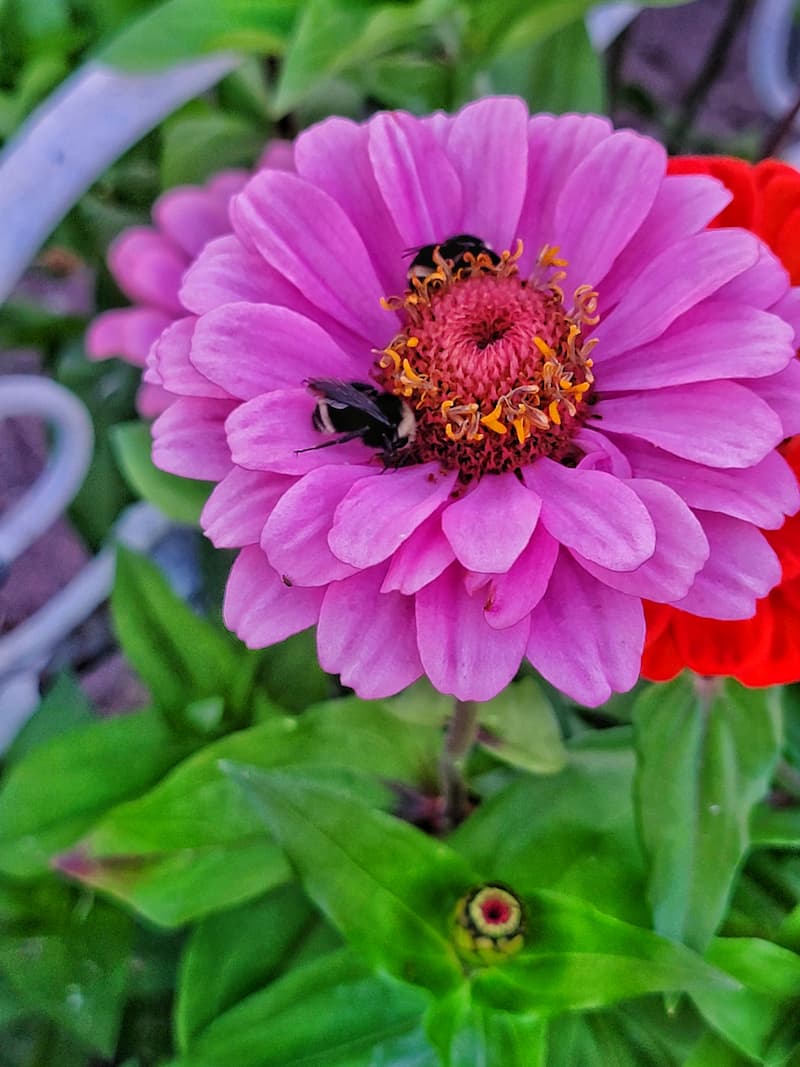
Pollinators such as bees, butterflies, and hummingbirds are constant visitors. My favorite overnight guests are the bumblebees sleeping inside the zinnias.
Key Characteristics of a Cottage-Style Garden
- Informal Layout: a free-flowing garden that appears to be spontaneous and unplanned
- Diverse Plant Selection: a variety of plants, including perennials, annuals, biennials, and self-seeding plants, are grown
- Abundant Planting: a wide range of flowers, shrubs, and even vegetables are often grown together
- Climbing Plants: climbing and trailing plants like roses, clematis, and honeysuckle often add vertical interest to the garden
- Garden Paths: informal and irregular garden paths made from gravel, stepping stones, or bricks
- Mix of Colors: Flowers of various colors, shapes, and sizes are planted together
- Wildflower Feel: a sense of wildness and informality that may include native plants and self-seeding plants to spread and fill in gaps
- Rustic Elements: vintage or upcycled containers, trellises, and arbors create interest in the garden
- Seasonal Interest: selecting plants with different bloom times and foliage colors to create interest throughout the seasons
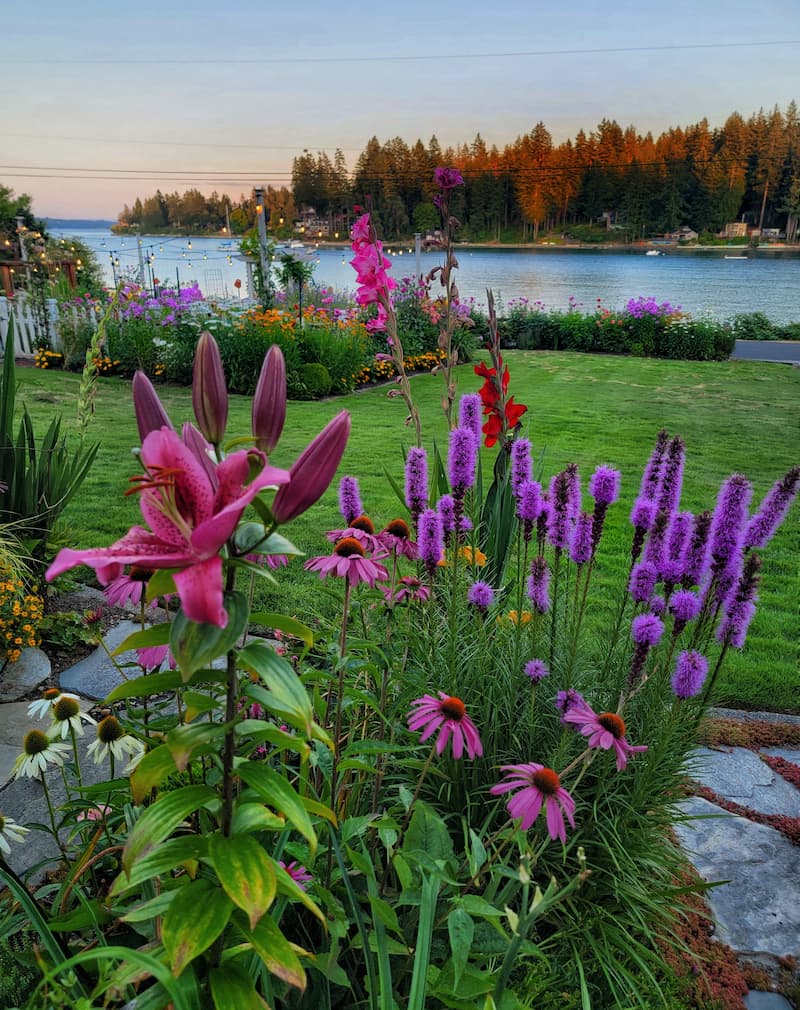
Late Summer: A Time of Transition
Late summer marks the transition from the heat of July and August to the crispness of the autumn air. The days may still be warm, but there’s a hint of coolness in the air that signals the changing of the seasons.
This transition also affects the garden. Some cottage flowers, like daisies and gladiolus, have faded, while others, such as asters and mums, are just beginning to show their colors. It’s a time when the garden prepares for its final show of the year.
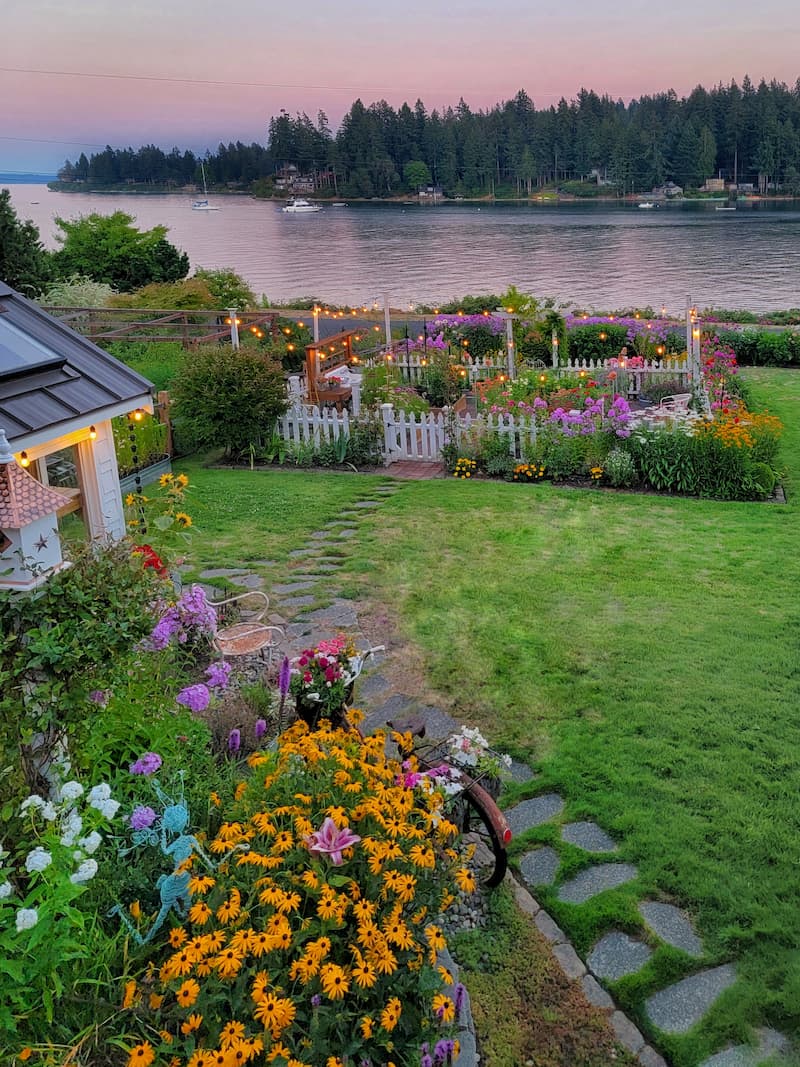
Soon, the leaves on the trees will start falling, and the heavy frosts will set in. But for now, we still have this late summer garden view to enjoy.
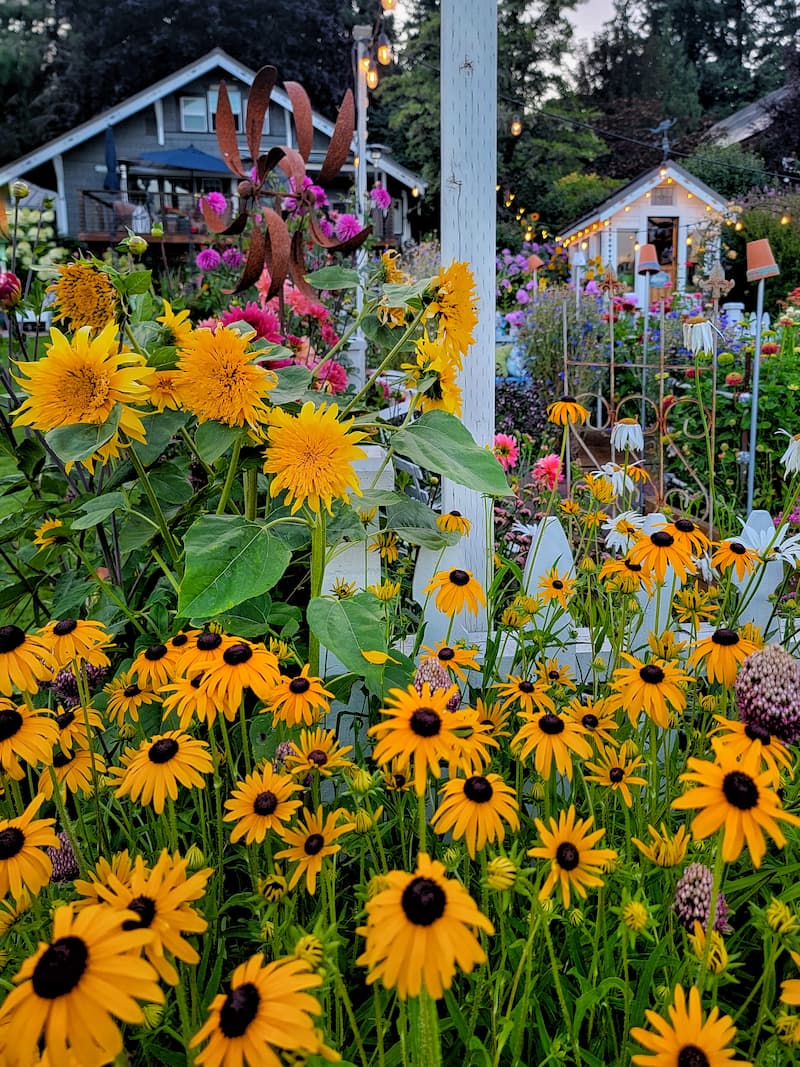
Featured Flowers in My Cottage Garden
Here are some of the flower favorites that are growing in my garden during the late summer season. I hope you find some of your own favorites to plant after seeing some of mine.
Black-Eyed Susans
In my cozy cottage-style garden, you’ll find many of my outdoor garden spaces with Black-Eyed Susans (Rudbeckia) growing. These sunny blooms have a special charm with their dark centers.
Among the relaxed mix of plants, Black-Eyed Susans stand tall and show off their bright petals that look like cheerful daisies. They not only add a burst of color to the summer garden, but pollinators love them.
Dahlias
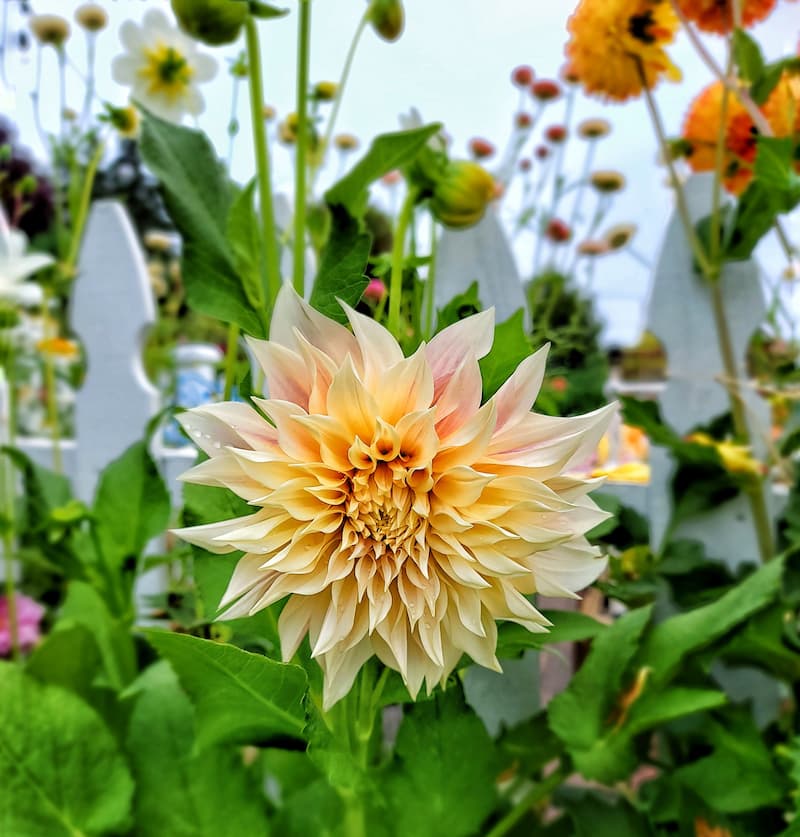
As I continue my summer stroll through the cottage garden, I’m overwhelmed by the beauty of the stunning dahlias, some of the most popular flowers for a cottage garden.
Dahlia blooms come in a variety of colors and shapes. Their stems stand tall and add a touch of elegance to the laid-back vibe of my garden.

Don’t let your guard down just because it’s late summer. Support your dahlias upright with stakes or other methods.
Another reason why I love these summer flowers is that dahlias are one of the last ones blooming until the first hard frost or heavy rainfall.
Coneflower
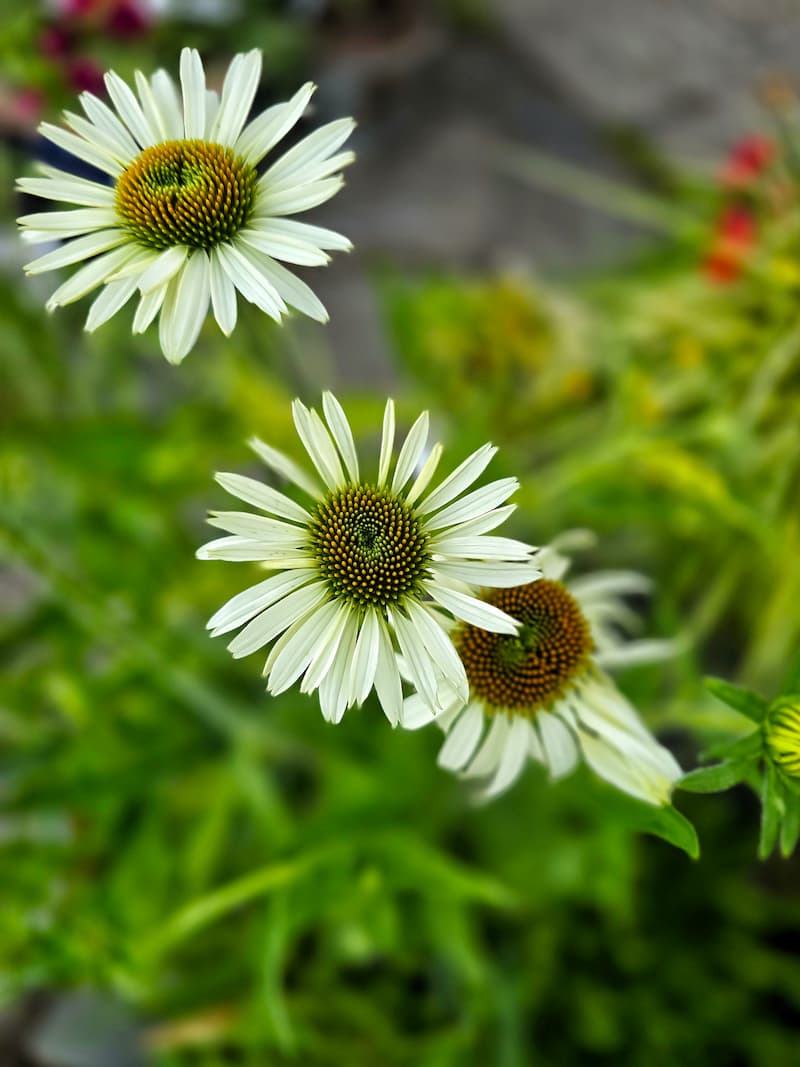
I have a very special fondness for coneflowers, also known as echinacea. The pollinators in my garden love them, and my goal is to grow every color available.
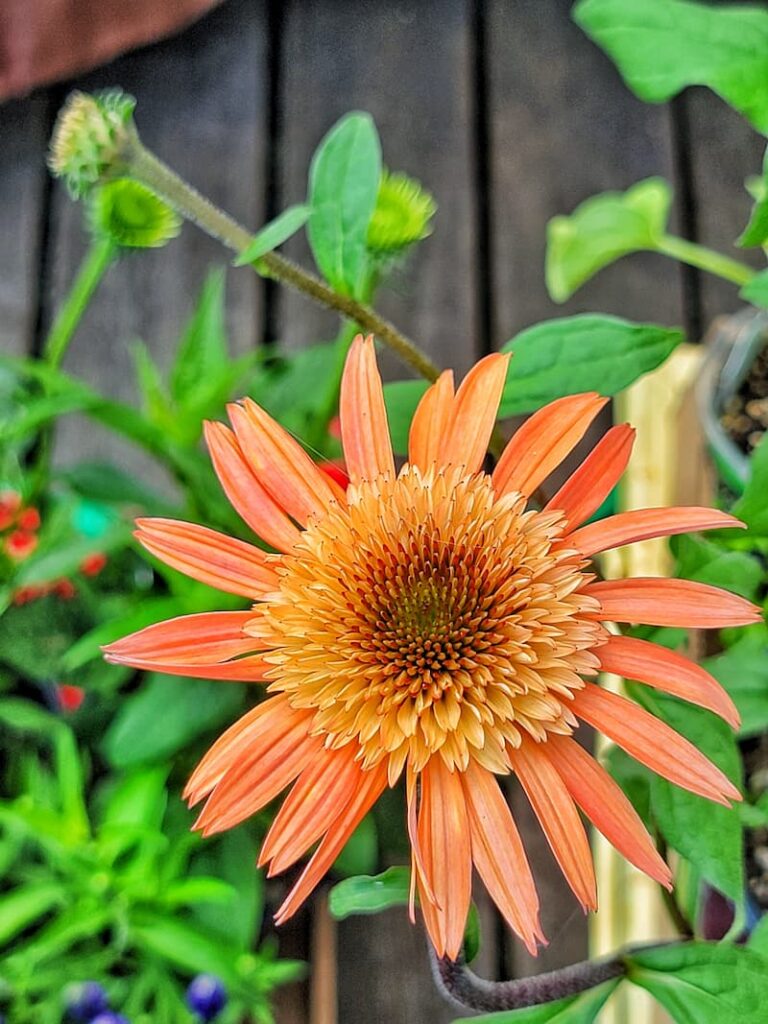
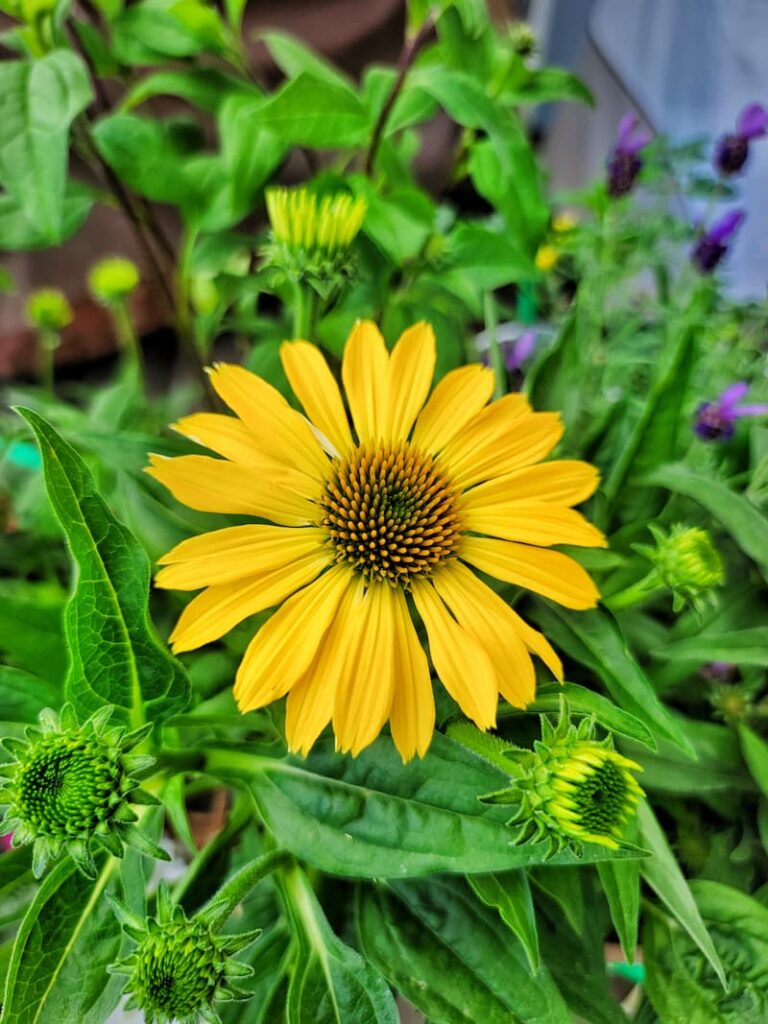
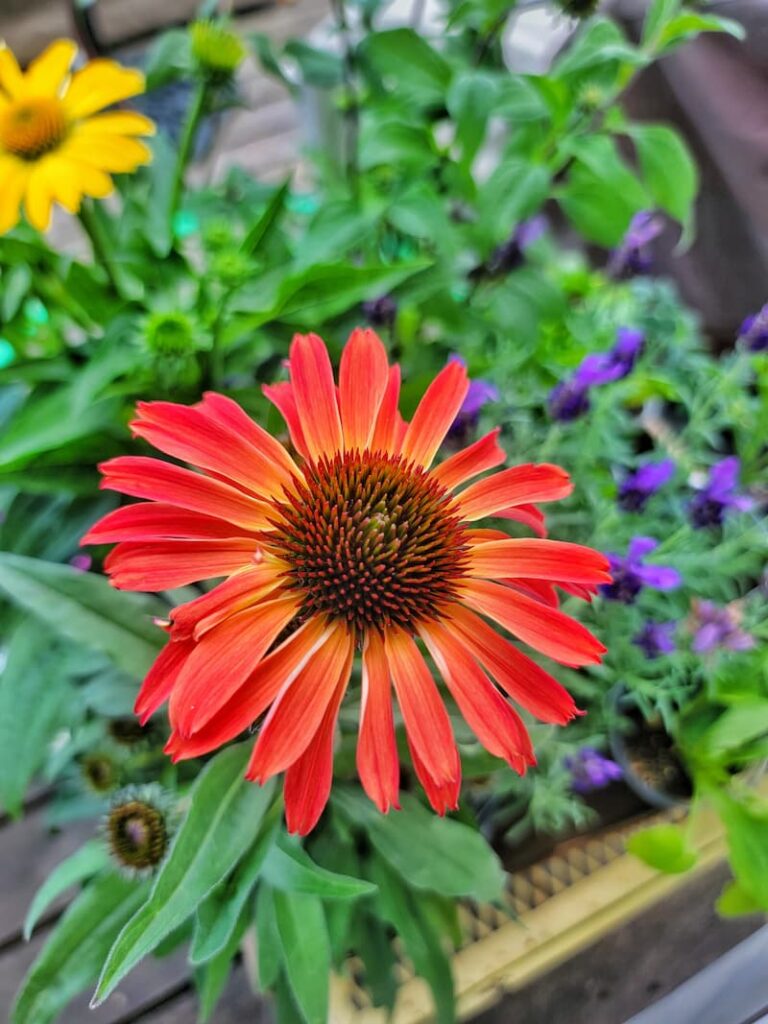
This is the first year I grew coneflower colors other than purple. Check out my late summer cottage-style garden’s white, red, orange, and yellow flowers.
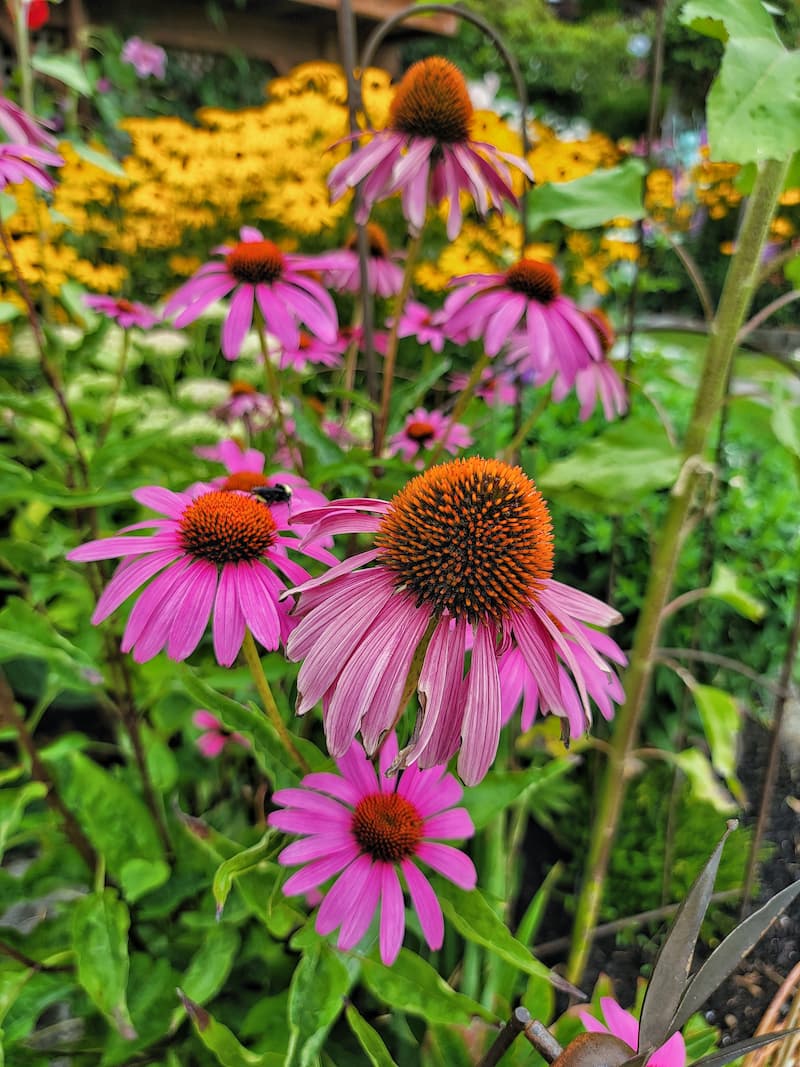
Coneflowers’ daisy-like blooms with distinctive cone-shaped centers are perfect for an informal cottage garden.

Hydrangeas
There aren’t many late-blooming perennials in my garden that grow in part shade, but hydrangeas are one of them.
Hydrangea plants have big, round flower clusters and come in shades of blue, pink, and white. They bring a touch of nostalgia to the garden’s easygoing vibe, fitting right in with the mix of plants and adding timeless charm to any outdoor space.
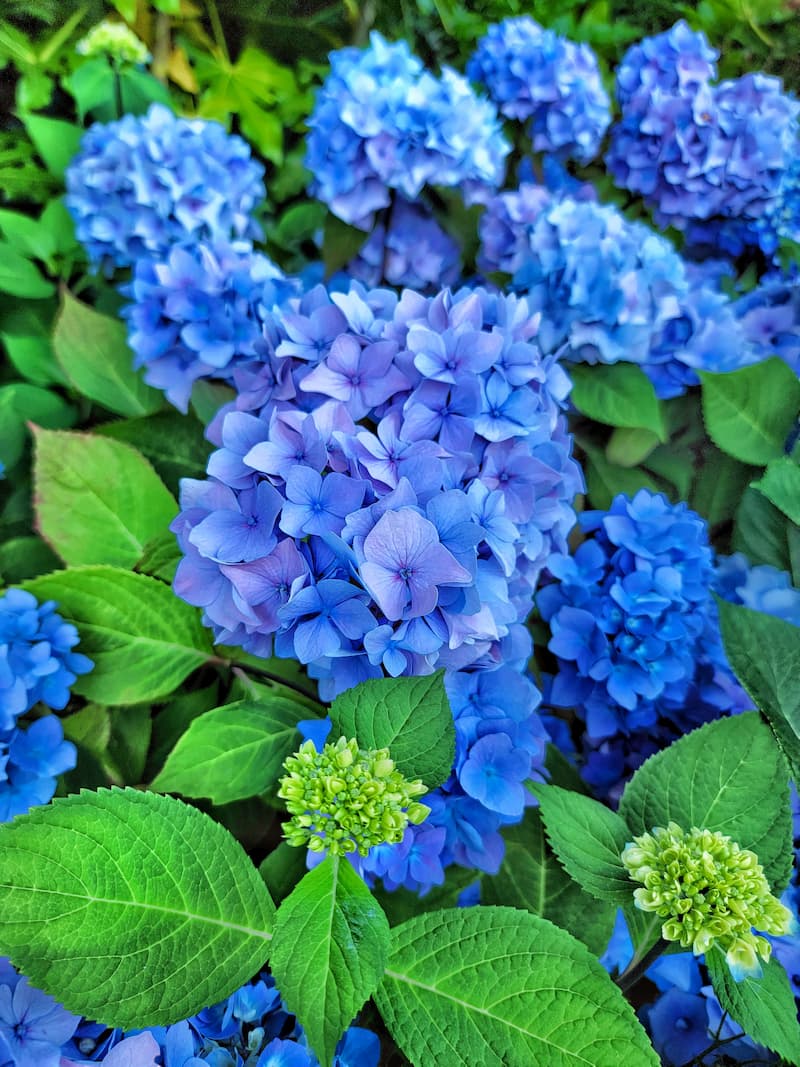
I have been loving my hydrangeas this summer. These are perfect plants for a cottage garden. They’re just getting to the point when I can take them inside to dry and use them for my fall home decor.
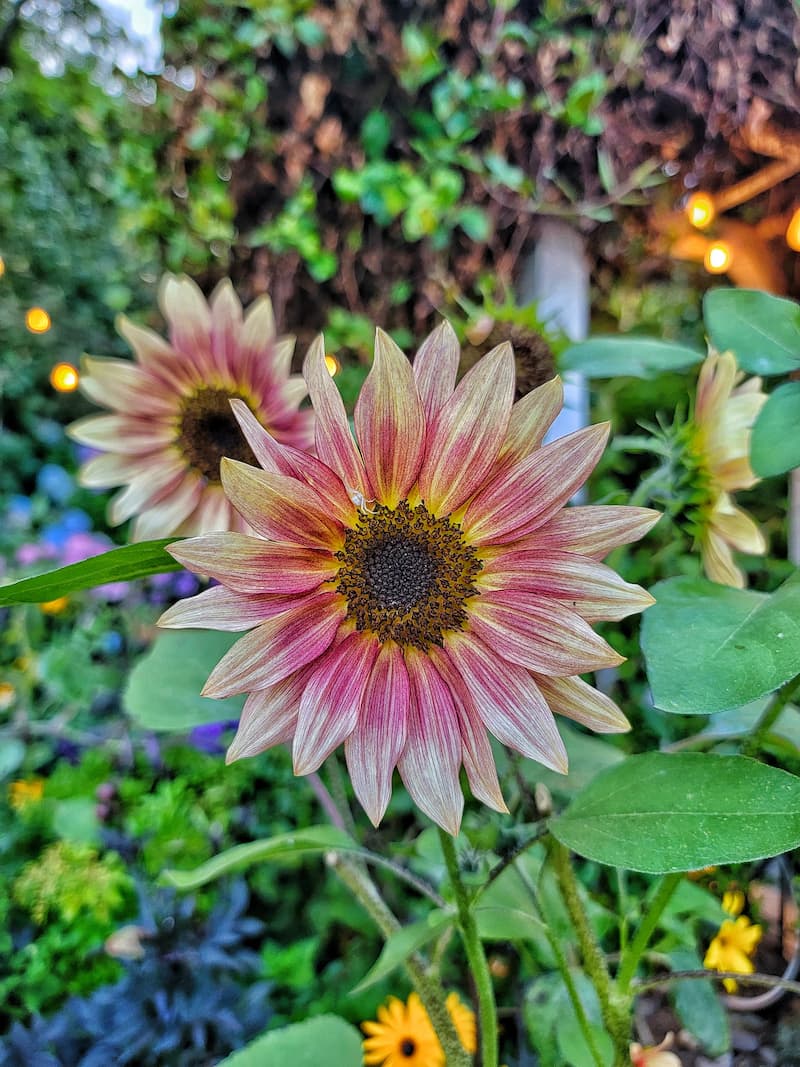
Sunflowers
I grew a few different varieties of sunflowers this year in the garden.

- Frilly
- Greenburst
- Pro Cut White Lite
- Ruby Eclipse
The presence of sunflowers in my cottage garden brings an undeniable sense of cheerfulness.

Sedum Autumn Joy
These unique hardy perennial succulents have clusters of tiny flowers that transform from rosy pink to rusty red as fall approaches. Its succulent leaves and changing colors blend into my garden’s natural spaces effortlessly.
Sedum Autumn Joy will grow in dry and hot climates, making it a great addition to gardens in regions with limited water resources. Its thick, fleshy leaves store water, allowing the plant to survive periods of low water availability.
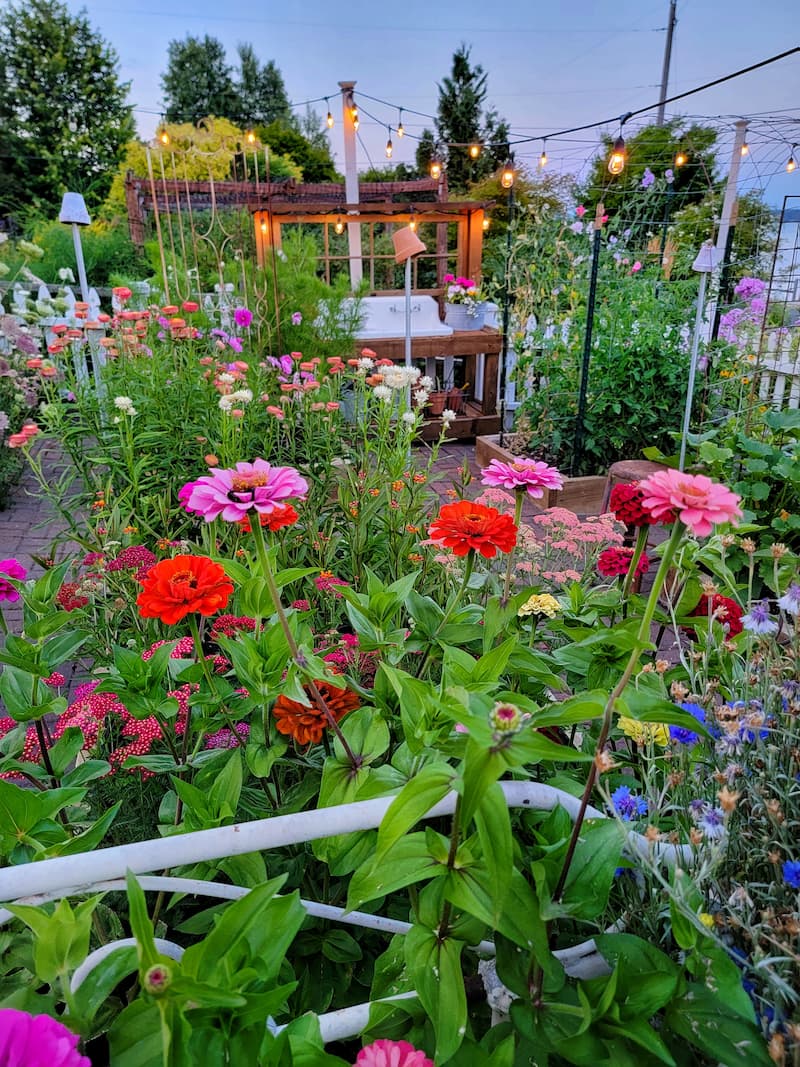
Featured Flowers in My Cut Flower Garden
Now that you’ve had a chance to see my cottage garden flowers let’s hop over to the cut flower garden and see which late summer flowering plants are blooming.
Most of the cutting flowers I grow are annuals and thrive in the full sun and in well-drained soil.

Zinnias
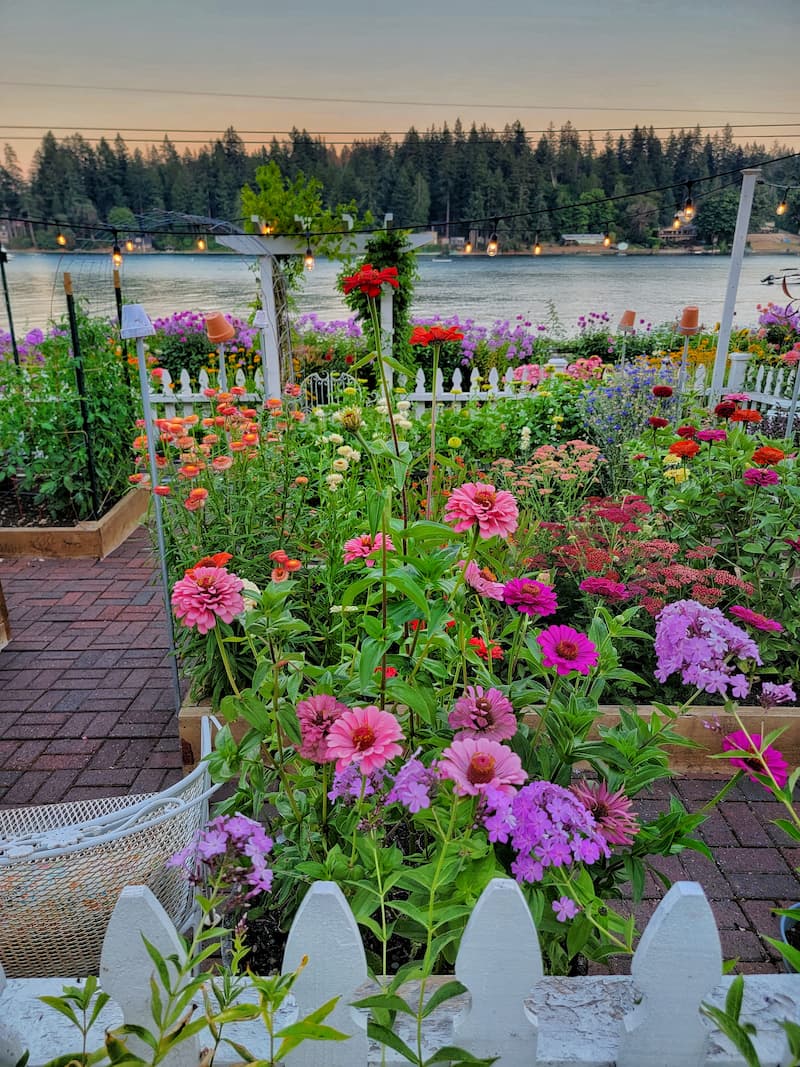
I think you’ll agree that the bright zinnias in the cutting garden are the stars of the show. These vibrant flowers come in many hues, from fiery reds and oranges to pretty pinks and sunny yellows.
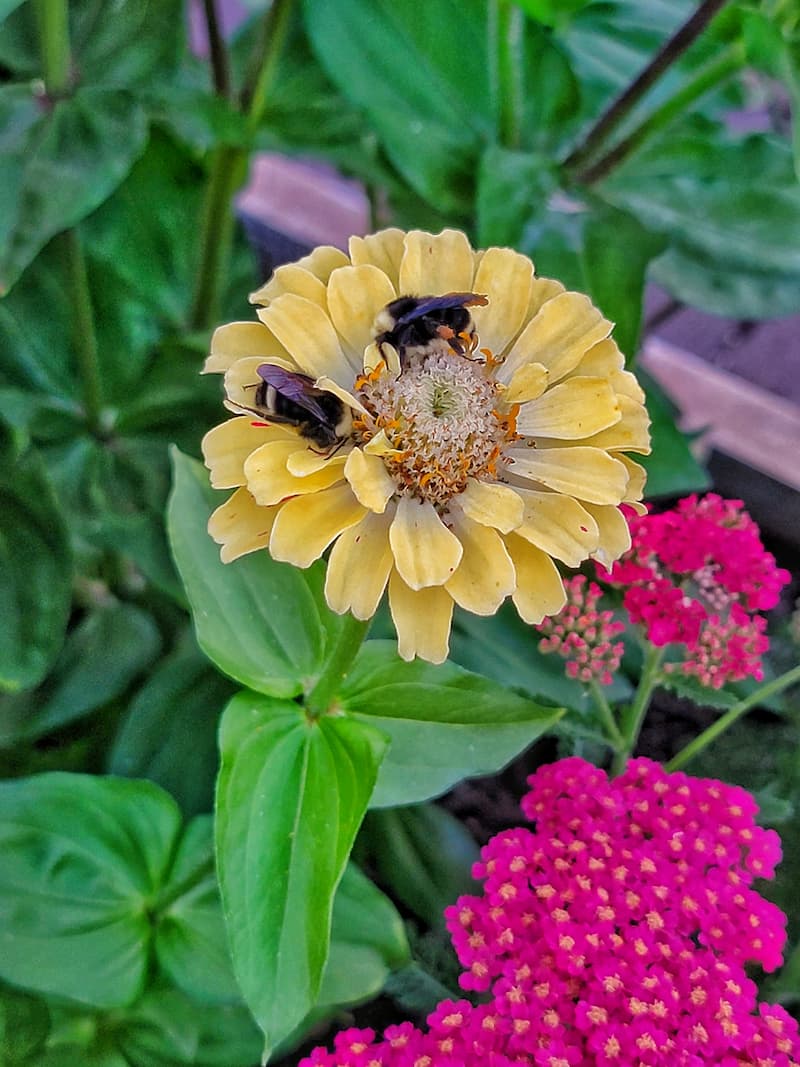
Butterflies and bees are drawn to zinnia flowers’ nectar-rich blooms and even sleep inside their petals in the evening. It is one of the most amazing things I’ve ever witnessed.
Zinnias are the life of the late summer party, and their diversity never fails to amaze. I’m saving my zinnia seeds this year to grow the varieties that aren’t available in my garden.
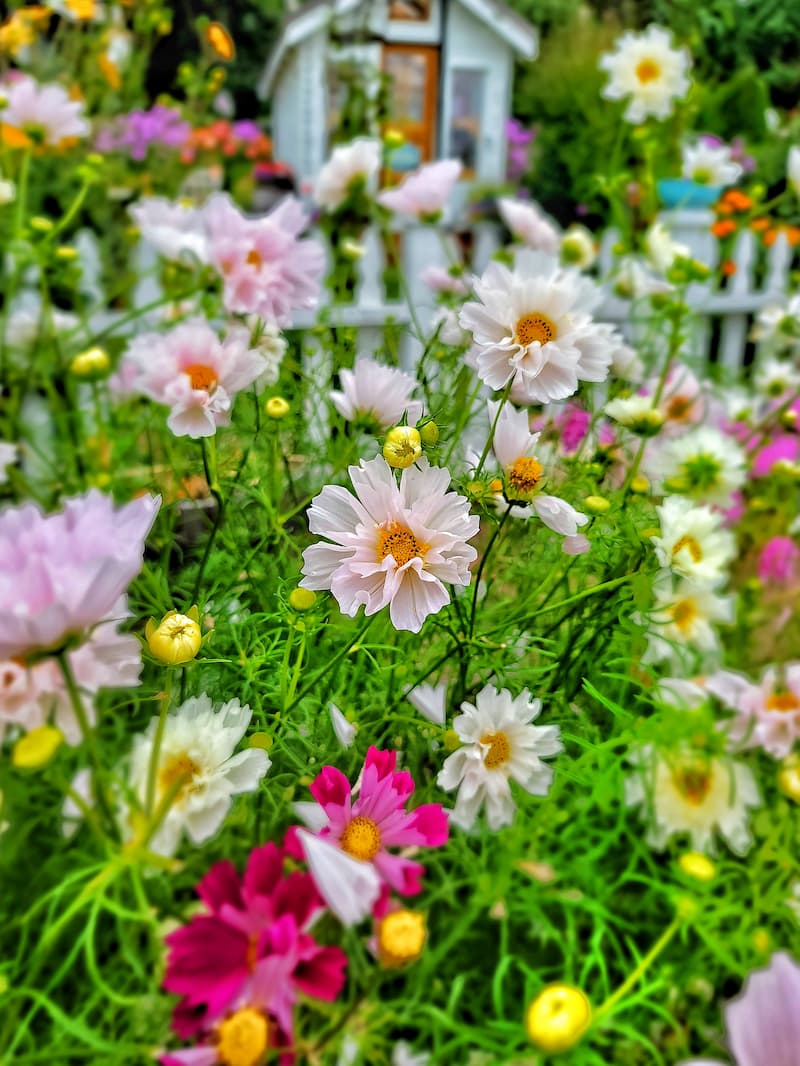
Cosmos
If you’re looking for a flower that embodies the essence of cottage style, cosmos are a great choice. These late summer blooms have an effortless beauty, with their delicate, daisy-like petals in shades of pink and white.
Cosmos are one of the most relaxed flowers in my cut flower garden. They sway gently in the breeze and add a touch of whimsy to my outdoor space. Their tall, slender stems and feather-like foliage add an extra layer of interest to my flower arrangements.
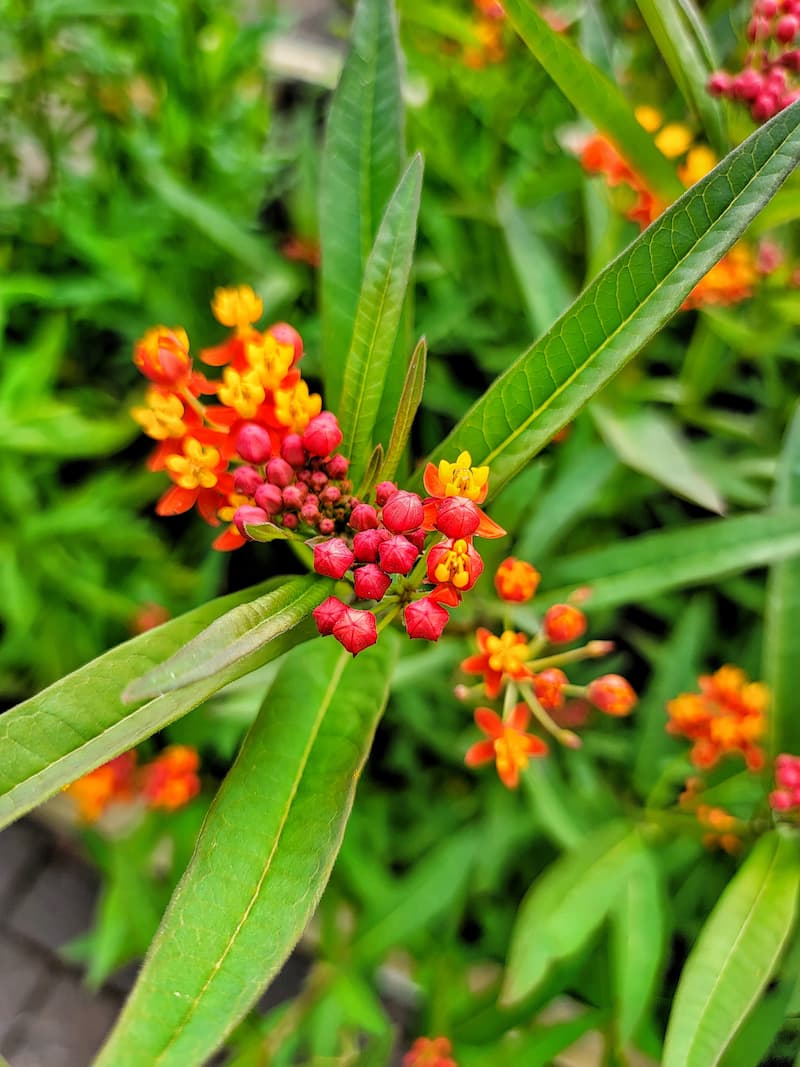
Milkweed
This is my first time growing milkweed, but I was excited to try this plant.
With their red and orange flower clusters, they’re like magnets for butterflies and provide essential habitat for Monarch butterflies and other pollinators.
I planted my tropical milkweed seedlings in the same raised bed as the vibrant zinnias, yarrow, and strawflower and loved the entire color scheme.
Strawflower
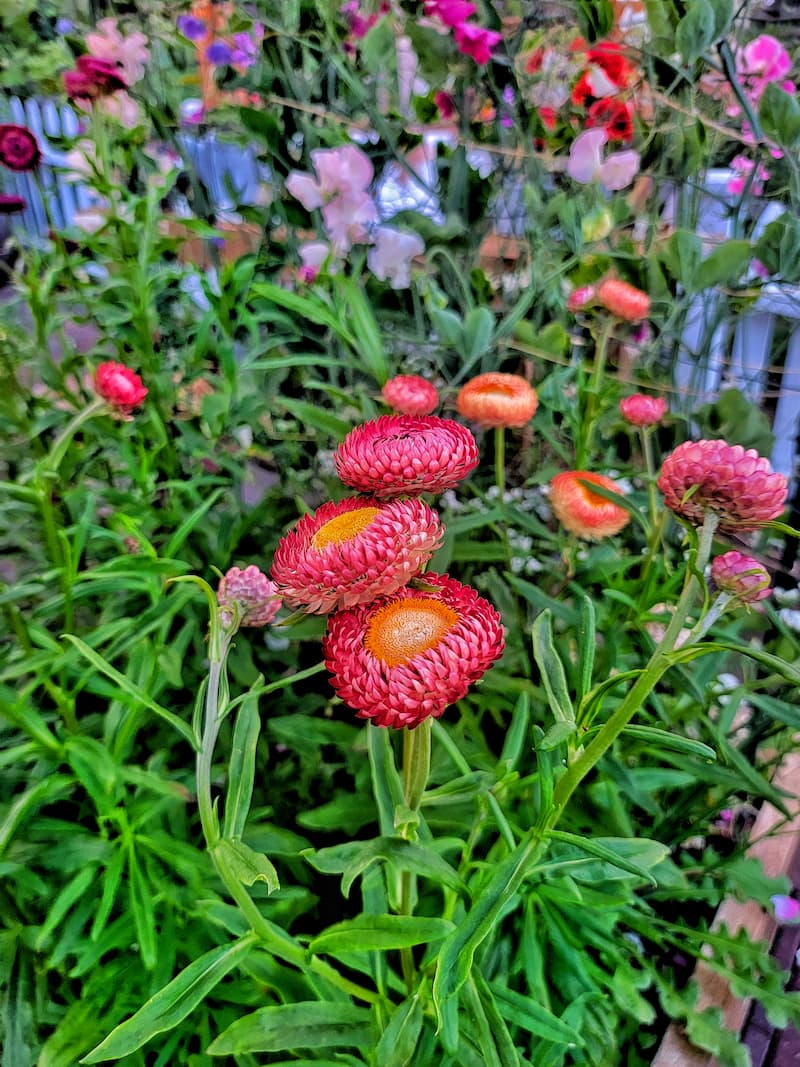
Late summer in the cut flower garden wouldn’t be the same without strawflowers.
These unique blooms resemble paper-like petals of apricot, pink, white, yellow, and more and are a perfect transition from late summer to fall.
I’ve cut a lot of strawflowers to take in and dry for fall. They really do hold their color and shape well. The flowers I dried last year are still hanging on my pot rack and look like they were from this season.
Yarrow
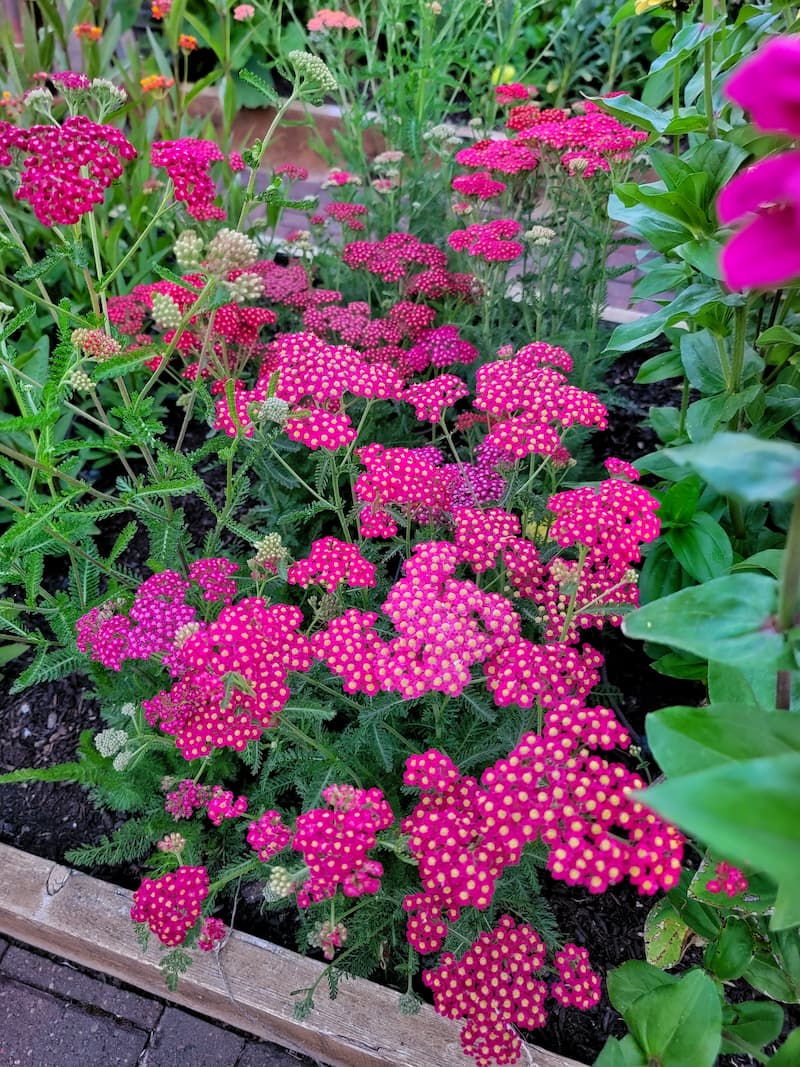
With its feathery foliage and clusters of tiny flowers in shades of white, pink, and yellow, yarrow is a charming addition to any late summer arrangement. It is also a great bloom to dry.
Yarrow is a great attractor for beneficial insects like butterflies and bees in the garden.
I grew the summer berries mix this year, and the colors were even more vibrant than I had imagined.
Statice
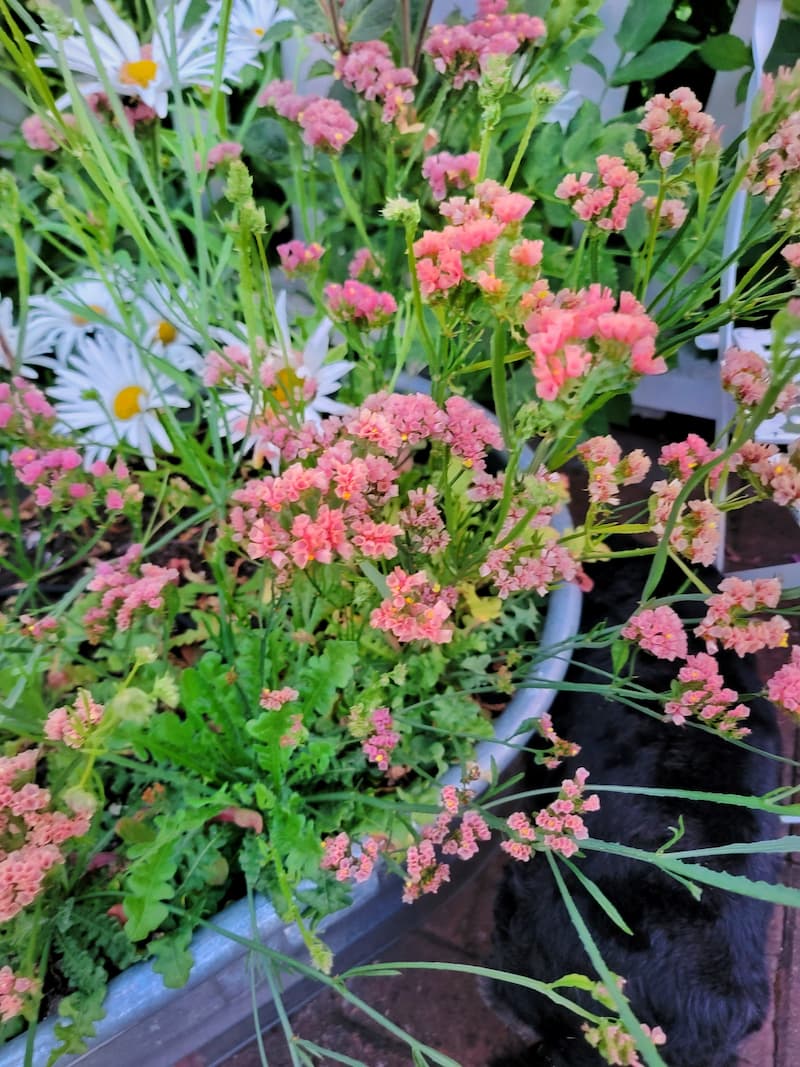
Speaking of drying flowers, statice is a fabulous option. Statice blooms are like clusters of delicate, papery jewels and are deer-resistant.
I’ve grown white, purple, and apricot colors in my cut flower garden. Seeds can come in some great, stunning mixes in any gardening space.
Caring for Late Summer Blooms
Late summer can be challenging for plants, with heat and occasional drought. Regular watering, especially for potted plants, is crucial.
Provide a layer of mulch to help retain moisture and keep the soil cool. Continue deadheading the spent blooms and watching for pests and disease.
As I look at my late summer garden again, I’m filled with gratitude for another amazing and rewarding year in the cottage garden. The sunflowers, zinnias, dahlias, black-eyed Susans, coneflowers, strawflowers, and all the other blooms brought great joy this summer.
I hope you enjoyed this peek into Kim’s garden! See more of her beautiful gardens at Shiplap and Shells!
Absolute perfection in a cottage garden, Kim! Chloe, thank you for hosting Kim’s post. I loved every flower grown, and know them all very well.