
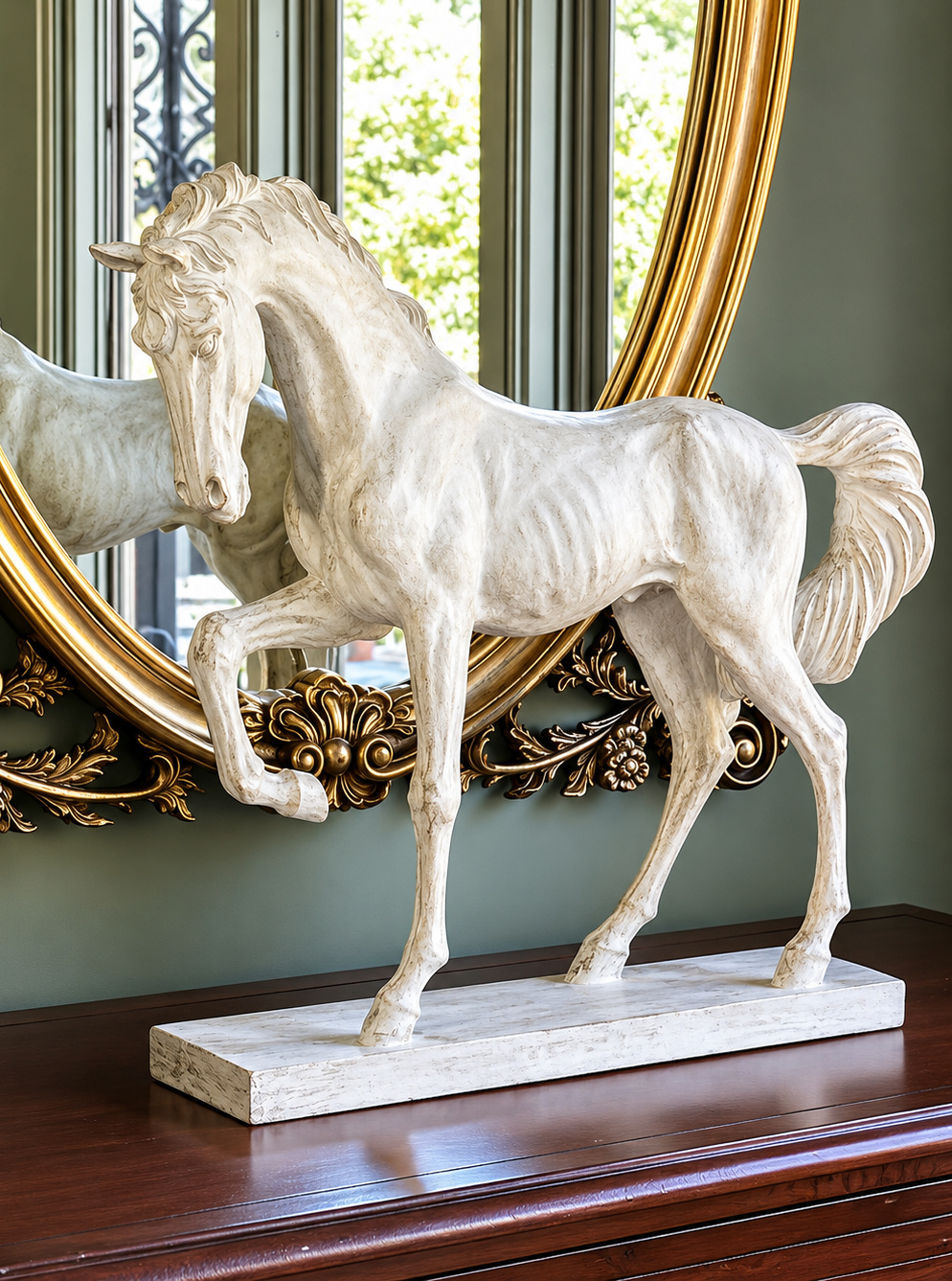
How Do I Create an Old Money Look in My Home?
If you’ve spent any time on social media lately, you’ve probably seen countless videos and photos promoting the “old money” aesthetic. Unfortunately, many of them miss the mark. They focus on expensive furniture, formal rooms, and rigid decorating rules. In reality, creating an old money look in your home has very little to do with how much money you spend.
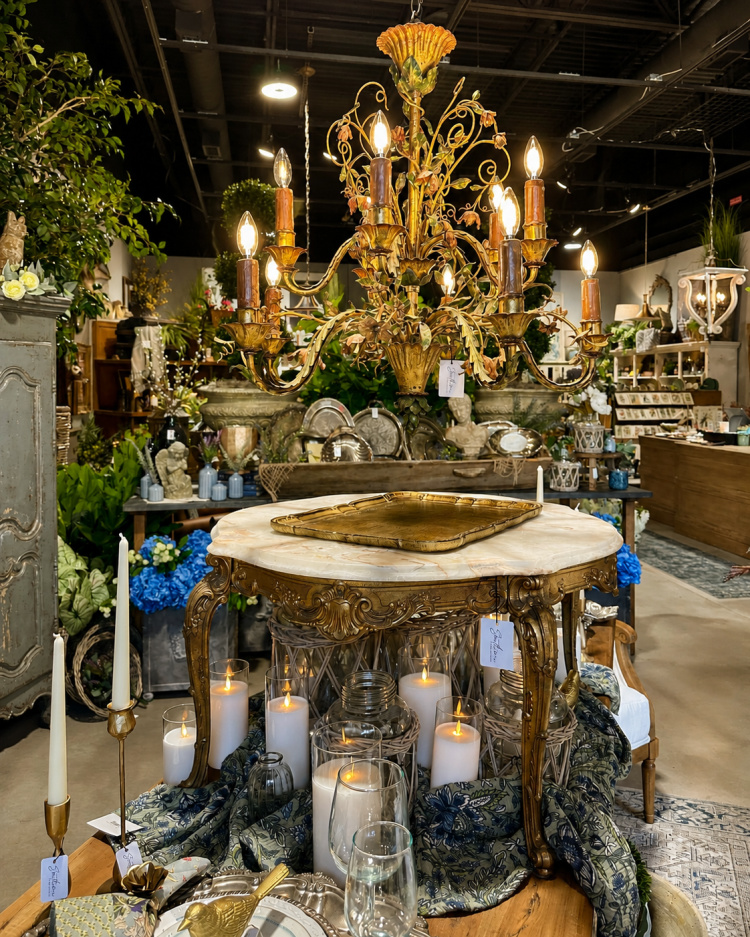
To me, old money style is about creating a home that feels as though it has evolved over time. It feels collected rather than decorated. It feels comfortable rather than formal. Most importantly, it feels warm and welcoming.
I have embraced this style in my current Georgia home, styling both my living room and primary bedroom with old money-inspired elements. While my former Florida home leaned more toward a yacht club version of old money style, my current home takes its inspiration from the Ralph Lauren aesthetic and English country houses. Through both homes, I’ve learned that achieving this look is less about following a formula and more about creating an atmosphere.
What Defines an Old Money Interior?
When I think of an old money home, I immediately think of classic architectural details, quality materials, and a feeling of history.
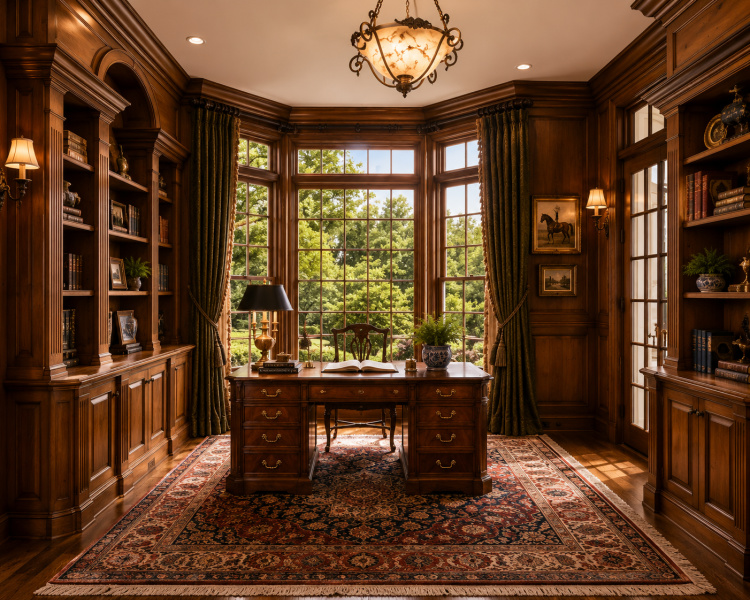
High ceilings, detailed crown molding, hardwood floors, oriental rugs, leather furniture, velvet draperies, stone surfaces, and dark wood furniture all contribute to the look. Books line shelves and sit stacked on tables. Elegant lamps cast a warm glow throughout the room. Ornately framed mirrors reflect light. Heavy textiles add comfort and richness.
But perhaps more than any individual item, old money style is about creating a sense of permanence. The room should feel as though it has been thoughtfully assembled over many years rather than purchased all at once.
My Own Approach to Old Money Style
One of the rooms in my home that best reflects this aesthetic is my living room.
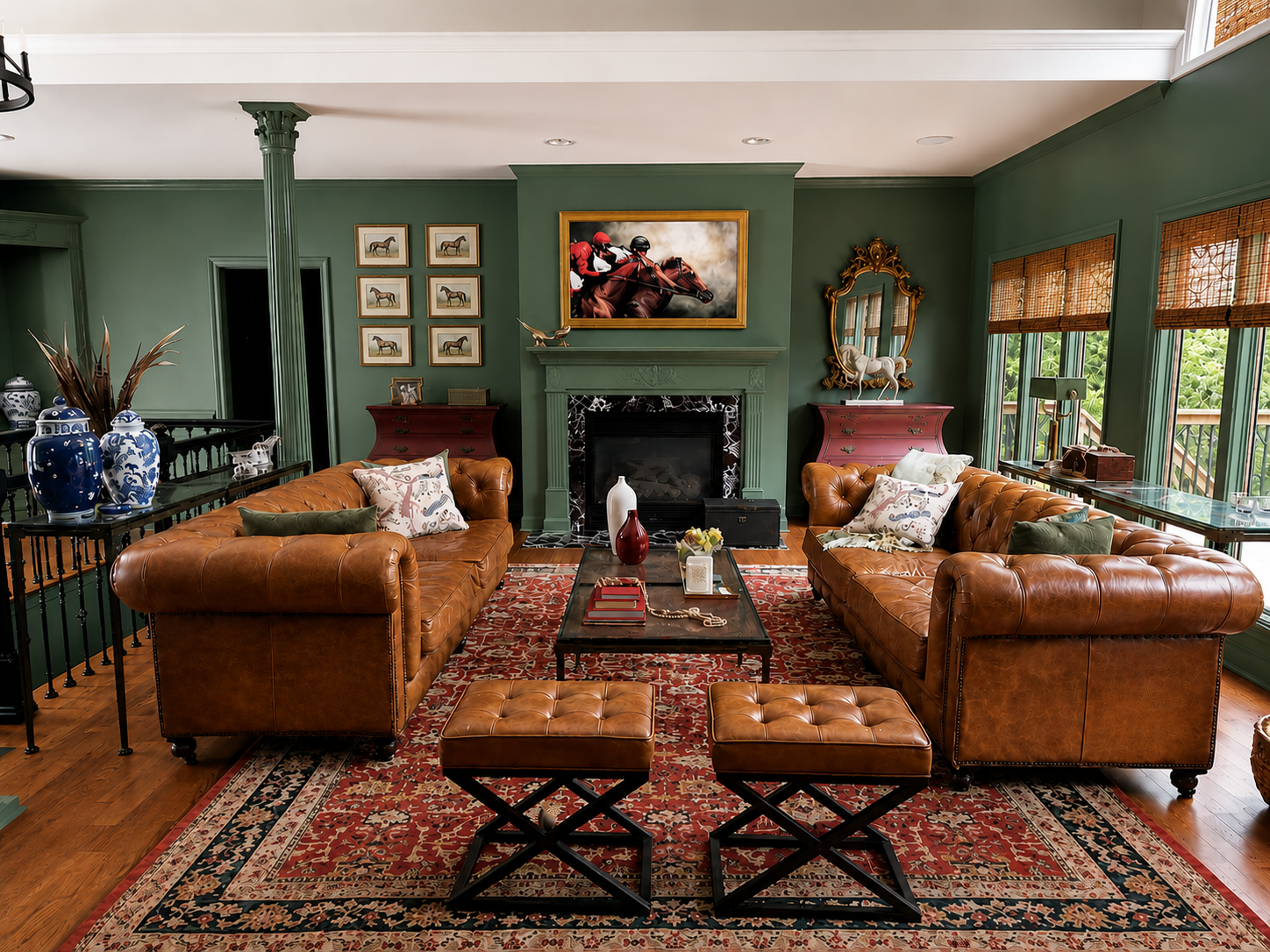
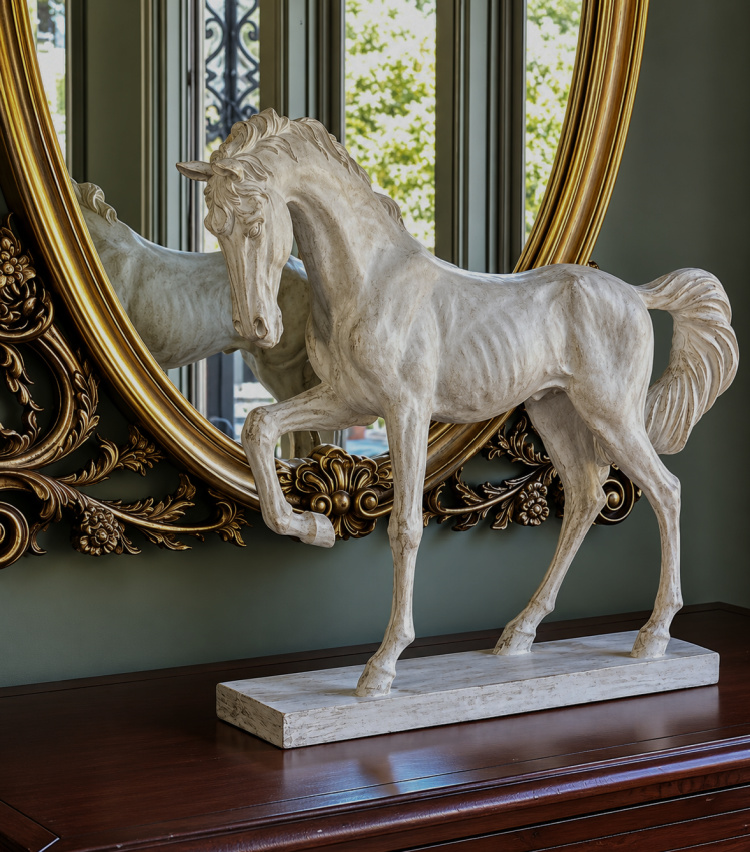
A pair of worn leather Chesterfield sofas anchor the space. A rich red oriental rug grounds the room and adds warmth. Old books, many sourced from thrift stores, are stacked on the coffee table. Gold-framed artwork featuring racehorses hangs above the fireplace. A pair of red bombe chests display family photographs alongside an equestrian figurine.
The walls and columns are painted a deep sage green, creating a cozy and enveloping atmosphere.
Interestingly, not every piece is antique. The bombe chests are relatively new, but they look as though they have history. That’s an important distinction. Old money style doesn’t require actual heirlooms. It simply requires pieces that feel timeless.
The Biggest Mistake People Make
If there’s one mistake I see repeatedly, it’s making a room too formal.
Many people assume old money means stiff, untouchable, and overly decorated. In reality, old money homes are often incredibly comfortable.
Guests should feel invited to sit down and relax. They shouldn’t feel nervous about where to place a glass or whether they’re allowed to touch anything.
Comfortable furniture is essential. Rich materials are wonderful, but they should never come at the expense of livability.
I also avoid buying matching furniture sets. Rooms that feel collected over time are much more authentic than rooms where every piece looks like it arrived on the same delivery truck.
Start With These Two Investments
If someone asked me how to create an old money look on a budget, I would recommend focusing on two things first.
Invest in the Right Size Rug
Nothing diminishes a room faster than an undersized area rug.
Choose a rug large enough that at least the front legs of your sofas and chairs sit comfortably on it. An oriental-style rug is a classic choice, but the most important factor is proper scale.
Add Floor-to-Ceiling Draperies
The next investment I’d make is drapery.
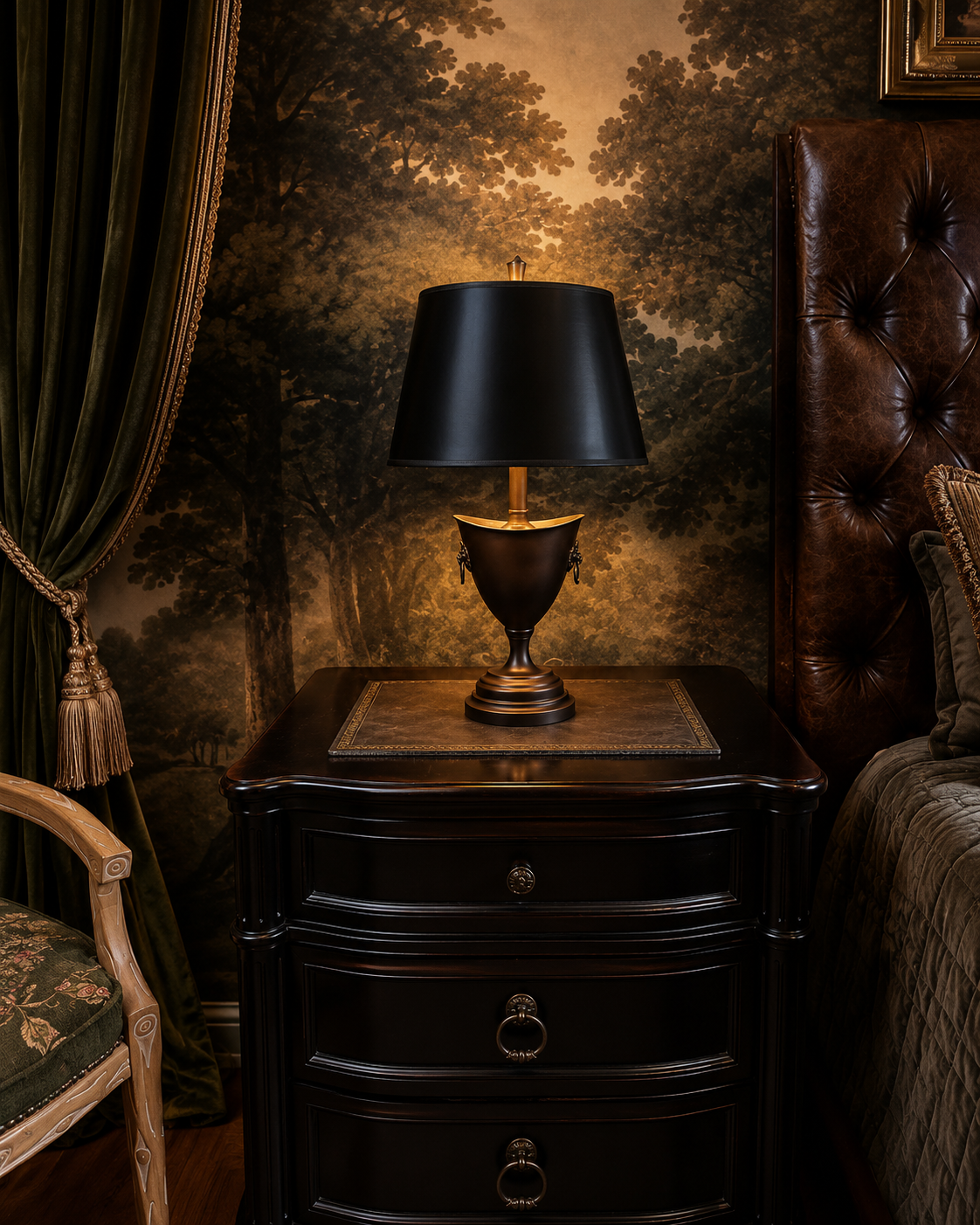
You don’t have to spend a fortune. I’ve found beautiful curtains at Amazon, Ikea, and Target. The secret is hanging them high and allowing them to flow all the way to the floor, or just about an inch above it.
This simple change instantly elevates a room and creates the sense of height often associated with traditional homes.
Choosing the Right Color Palette
My personal preference right now leans toward deep greens, but burgundy and rich coffee tones also work beautifully.
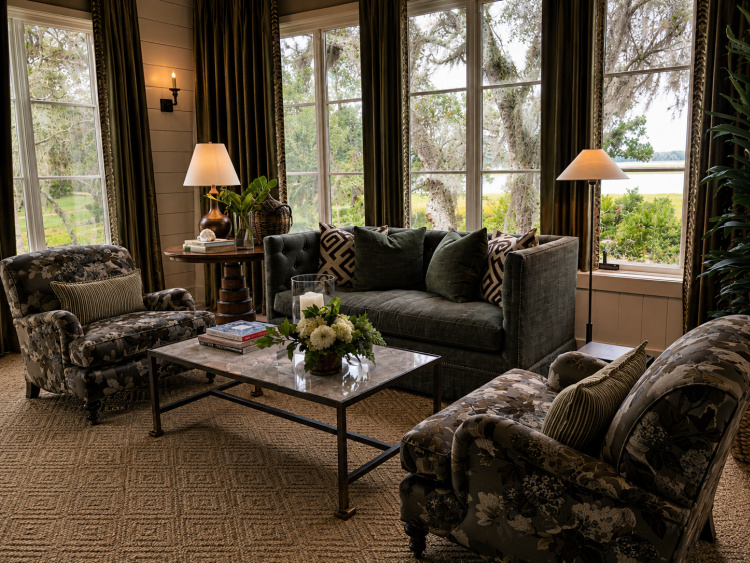
If your room lacks natural light, don’t feel obligated to paint everything dark. A creamy off-white can be just as elegant when paired with the right furnishings.
For upholstery, leather is one of my favorite materials for achieving this look. Shades of brown work beautifully, though black leather can also feel timeless.
When selecting wood furniture, I generally avoid blonde woods. Darker finishes tend to create the richness associated with old money interiors.
Accent colors can include reds, blues, greens, and even touches of pink when incorporated thoughtfully into fabrics and patterns.
Do You Need Antiques?
Not necessarily.
I do think rooms benefit from having something that looks old, but it doesn’t have to be a genuine family heirloom.
My stack of old books on the coffee table came from a thrift store. They cost very little but contribute enormously to the feeling of history in the room.
Large vintage pieces often make the biggest impact. A Chesterfield sofa, a worn leather chair, or an oversized tapestry chair can instantly establish the character of a space.
Estate sales, antique stores, thrift shops, and flea markets are wonderful places to hunt for pieces with personality and charm.
The Accessories That Matter Most
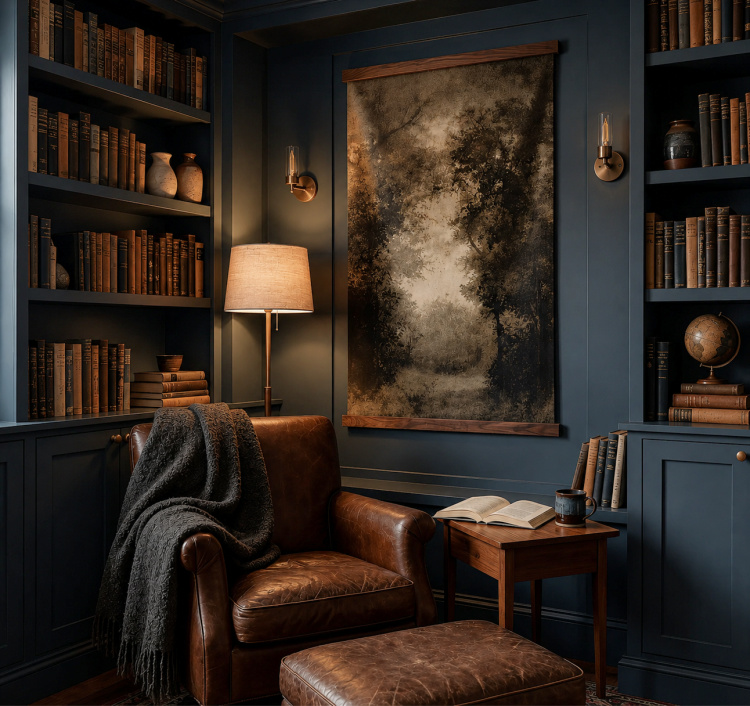
f I had to choose one accessory category, it would be books.
Books on shelves. Books stacked on tables. Books tucked into cabinets.
Nothing adds character quite like a collection of well-loved books.
I also prefer lamps over excessive overhead lighting. Layered lighting creates warmth and intimacy.
Other favorite accessories include trays, porcelain pieces, textured throws, equestrian artwork, and nautical elements.
The key is restraint.
I try not to make surfaces overly fussy. A room should be beautiful, but it should still function comfortably for everyday life.
You Don’t Need a Mansion
One of the biggest myths about old money style is that it only works in grand historic homes.
I live in a suburban home, not a sprawling estate.
While I’m fortunate to have picture molding on some of my walls, picture molding is actually a surprisingly affordable upgrade. Adding molding and painting both the walls and trim the same color can dramatically elevate an ordinary room.
The most important lesson I’ve learned is to decorate slowly.
Enjoy the hunt. Visit estate sales. Search thrift stores. Add meaningful pieces over time. The process itself is part of what makes the style feel authentic.
Finding Your Version of Old Money Style
Equestrian artwork, leather furniture, books, oriental rugs, and rich colors all play a role.
Someone else might prefer a nautical interpretation. Replace horses with boat models, maritime artwork, brass accents, and collected coastal treasures.
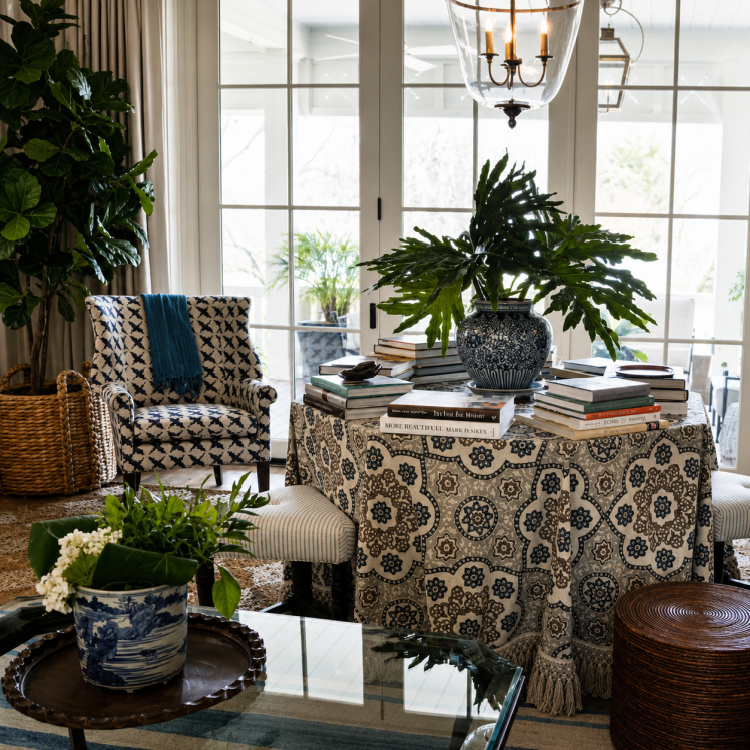
The beauty of old money style is that it can be personalized.
The goal isn’t to copy someone else’s home. The goal is to create a space that reflects your interests while maintaining a sense of history, quality, and comfort.
Final Thoughts
If there is one thing I hope you take away from this article, it is this: don’t overdo the formality.
The most beautiful old money interiors are not museums. They are warm, welcoming homes where family and friends feel comfortable gathering.
Mix old with new. Incorporate quality materials. Add books, rich textures, and pieces with character. Decorate slowly and thoughtfully.
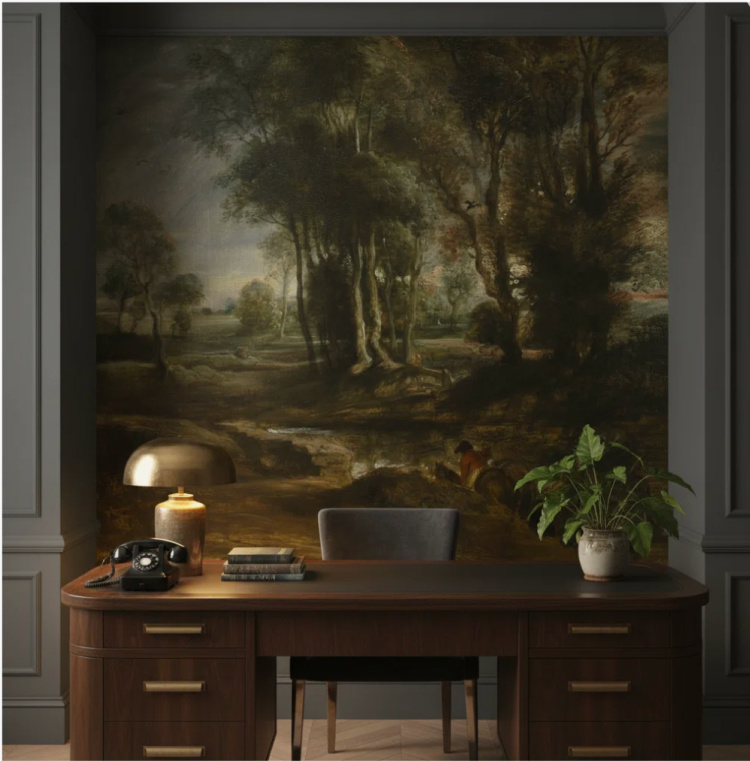
Most of all, create a home that tells your story. That’s what gives a room true old money charm.
Great post
Thank you so much Heather!