How to Style a Beautiful Tablescape Step by Step
Have you ever admired a beautifully styled tablescape and wondered how it all comes together?
Perhaps you’ve seen stunning tables on Pinterest or in magazines and assumed they required expensive china, crystal stemware, or a degree in interior design. The truth is, creating a beautiful tablescape is much simpler than most people think. After styling tables for more than a decade here at Celebrate & Decorate, I’ve learned that the most memorable tablescapes aren’t necessarily the most expensive. They are the ones that tell a story.
Whether I am styling a holiday table, an outdoor luncheon, or an intimate dinner with family, every tablescape begins the same way—with inspiration.
Today, I am sharing my personal step-by-step process for styling a beautiful tablescape. This is the exact approach I use when creating the tables you see here on the blog. While there are a few design principles that make creating a beautiful table easier, the wonderful thing is that anyone can learn them. Every tablescape you create helps you develop an eye for what works.
You don’t need an expensive collection of dishes or years of experience—you simply need a process to follow.
Let’s begin.
Step 1: Find Your Inspiration
If there is one thing I hope you take away from this post, it is this:
Every beautiful tablescape begins with inspiration.
One of the biggest mistakes I see beginners make is buying pretty pieces first and hoping they somehow work together later. I work in the opposite direction. I begin with inspiration, and every decision after that becomes easier.
The inspiration becomes your roadmap. Every decision you make afterward—from the dishes to the centerpiece to the smallest decorative detail—simply supports that original idea.
Before I select a single plate or unfold a tablecloth, I ask myself one question:
What is inspiring this table?
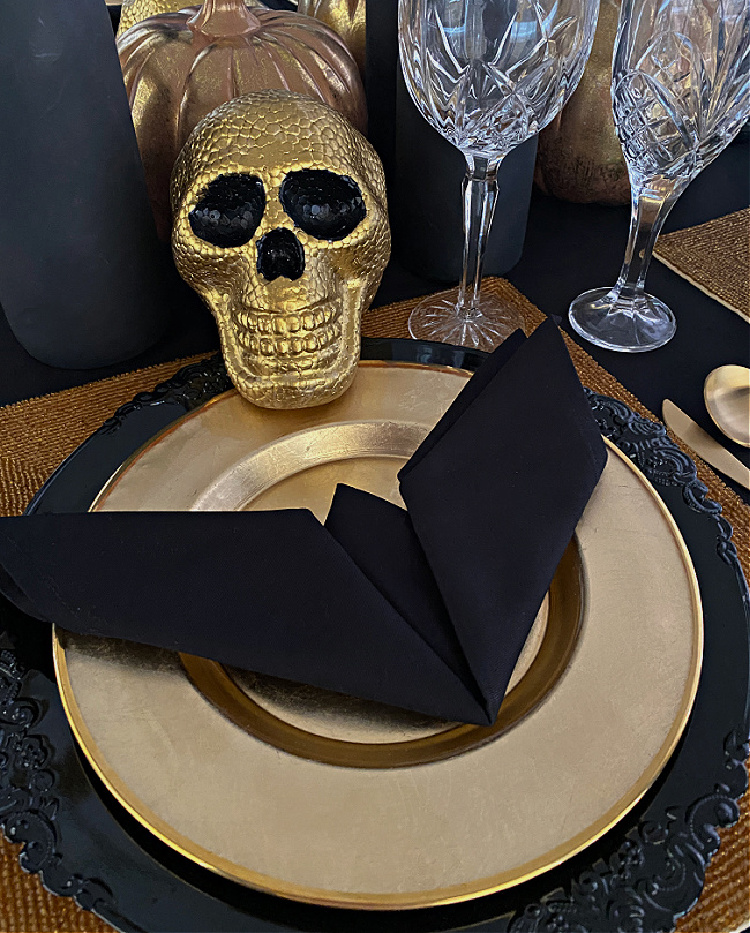
Sometimes it is a holiday theme. For Halloween, I may decide to build a table around witches, ghosts, bats, or pumpkins.
Other times, it is a single object.
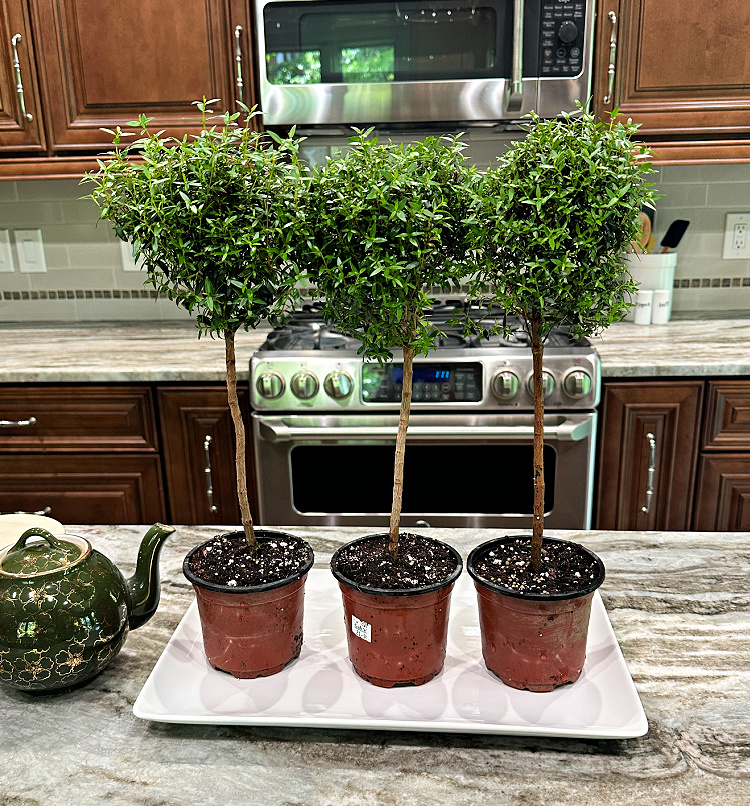
One of my favorite recent tablescapes began with two mulberry topiaries I spotted in a garden center while visiting Ohio. I loved them so much that I carried them home on the airplane because I knew they would make a beautiful centerpiece. Those topiaries became the inspiration for the entire table.
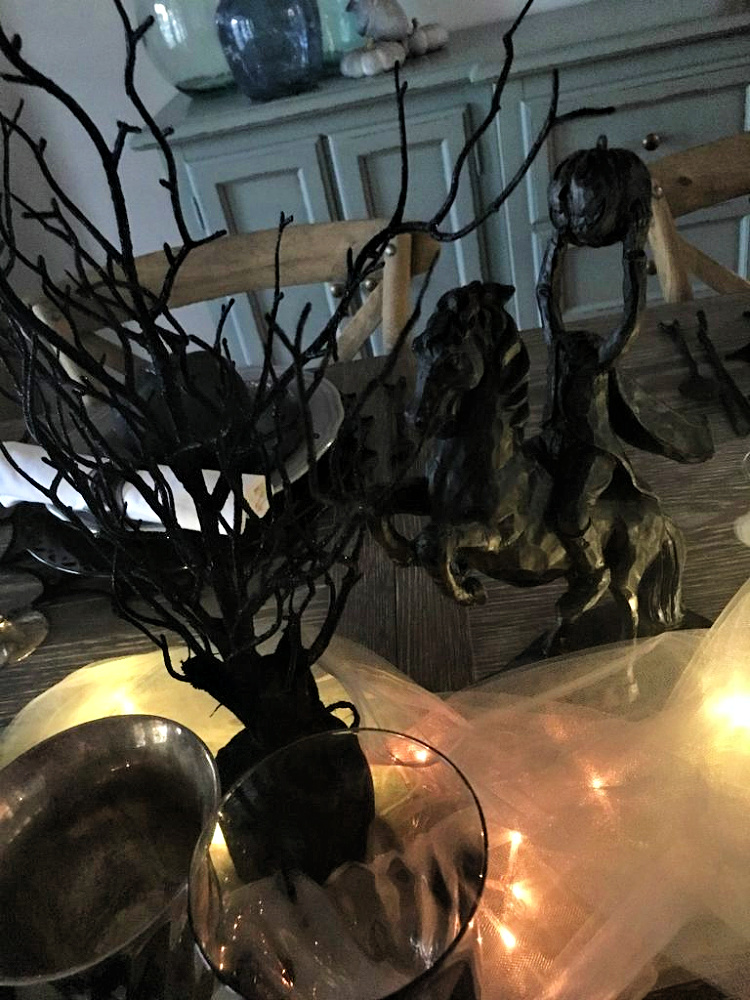
Another year, I styled a Halloween tablescape inspired entirely by a headless horseman figurine I found at Home Goods. The entire design evolved from that one piece.
Inspiration can come from anywhere:
- A set of dishes
- A piece of fabric
- Flowers from your garden
- A holiday theme
- A thrift store treasure
- An antique market find
- A magazine photograph
- A Pinterest image
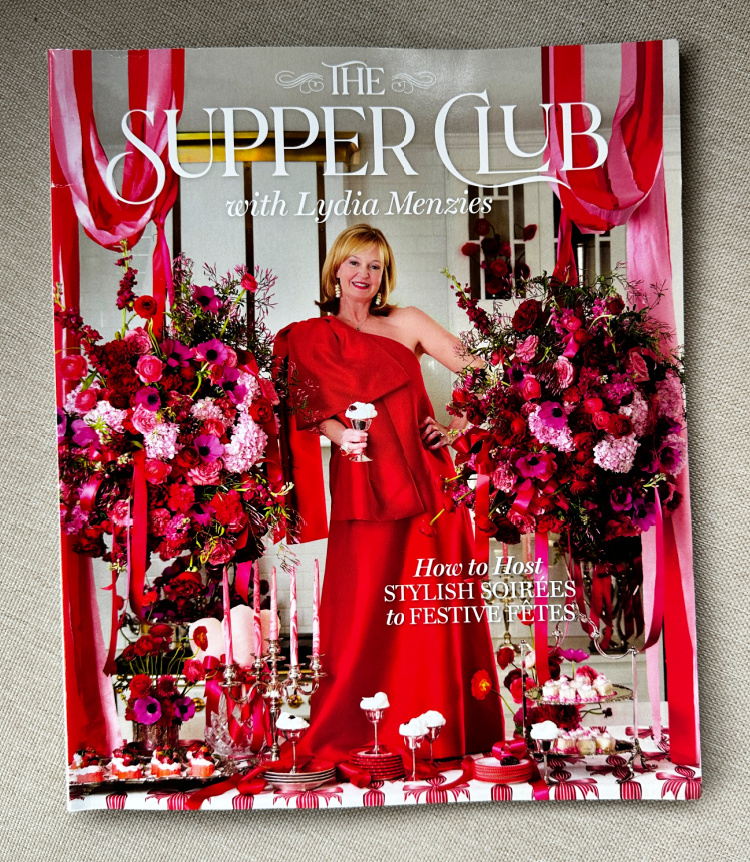
When I am feeling uninspired, I often visit Home Goods, antique stores, thrift stores, or simply flip through magazines such as Southern Living, Southern Lady, or Lydia Menzies’ Supper Club. Inspiration is everywhere if you are looking for it.
Don’t buy decorations first. Find your inspiration first, and let every other decision support that story.
Once you have your inspiration, the rest becomes much easier.
Step 2: Choose Your Color Palette
After identifying my inspiration, I determine the color palette.
The colors may come directly from the inspiration piece, the season, or simply the mood I want to create.
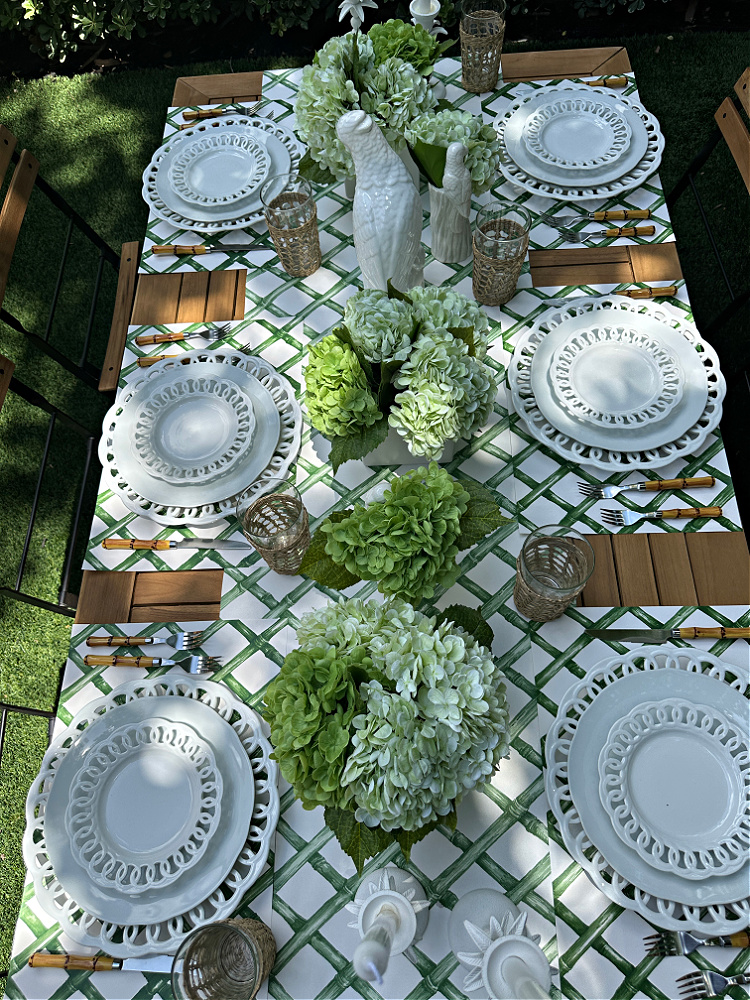
Sometimes I envision a soft monochromatic table layered in shades of one color. Other times I want a vibrant mix of colors that all work together harmoniously.
This is when I head to what my family affectionately calls my “china room.” It’s where I keep my collection of dishes, chargers, candle holders and entertaining pieces. I never pull just one set—I gather several possibilities and let the table tell me which combination works best.
I rarely use an entire matching set anymore. Instead, I love mixing dinner plates, salad plates, chargers, linens, and glassware from different collections. When they share a common color, style, or feeling, they often look far more interesting than a perfectly matched set.
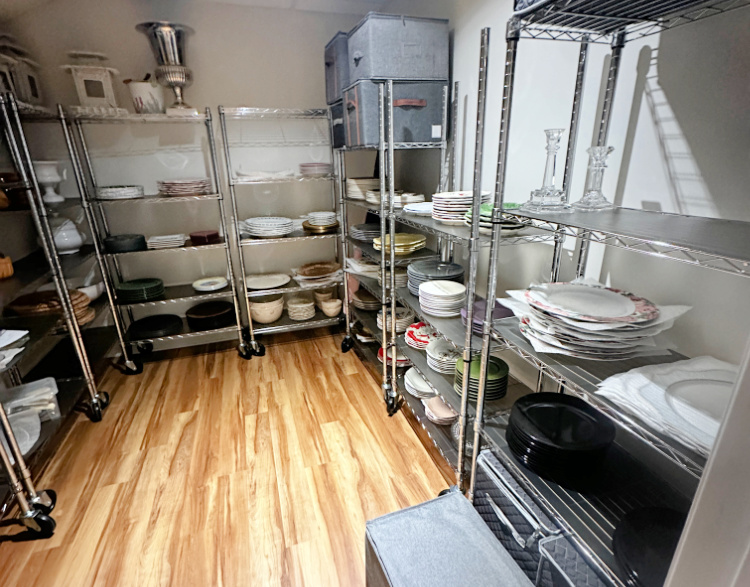
Rather than immediately committing to one particular set of dishes, I pull out several options that might work with my color palette. I gather chargers, placemats, tablecloths, napkins, dishes, and decorative accessories and bring them all to the table.
How to mix china patterns and layer plates
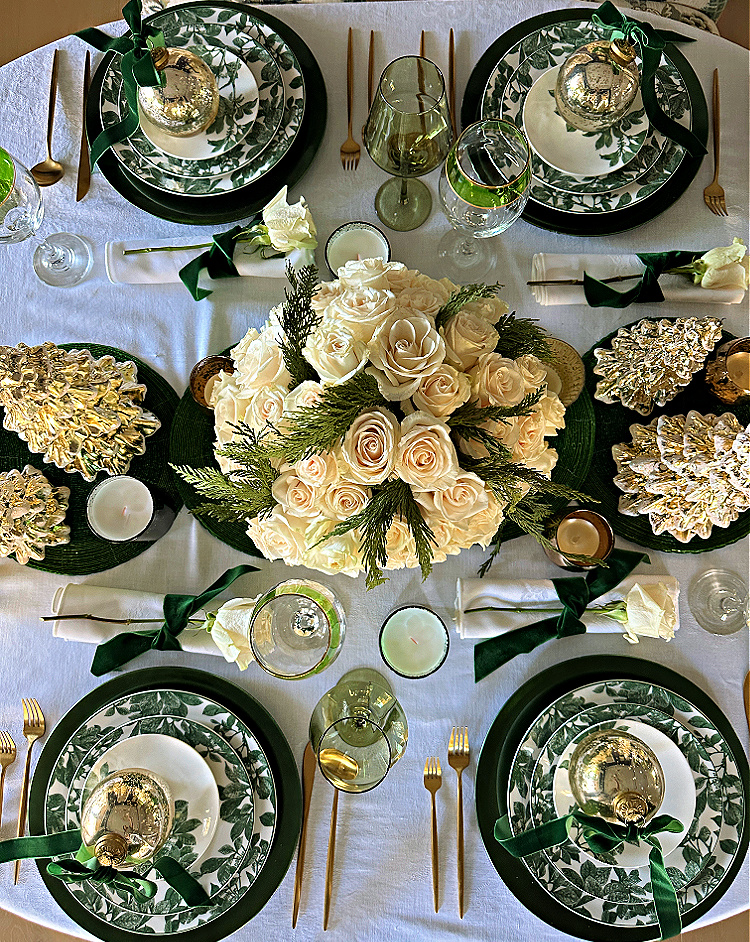
Don’t be afraid to mix dish patterns! The secret is to tie everything together with a shared color palette or a common background color. Start with a solid charger or dinner plate, then layer a patterned salad plate on top. Alternating solids and patterns adds personality and dimension while creating a table that feels collected and coordinated rather than busy.
Now comes my favorite part of the process. This is where creativity takes over and the table begins telling me what it wants to become.
Step 3: Audition Your Pieces
This may be the most important step in my entire process. I like to think of this stage as “auditioning” my pieces. Just because something looks beautiful in the cabinet doesn’t mean it’s the right choice for this particular table. Some pieces become stars, while others stay on the shelf until the next production.
Many people assume experienced tablescape designers simply envision a finished table and instantly know exactly what to use. That certainly isn’t true for me.
Instead, I experiment. This is when I mix and match dishes.
I may layer several folded tablecloths across the table and try different combinations. I will test various chargers and placemats. I stack dishes together and move them around the table until something begins to feel right.
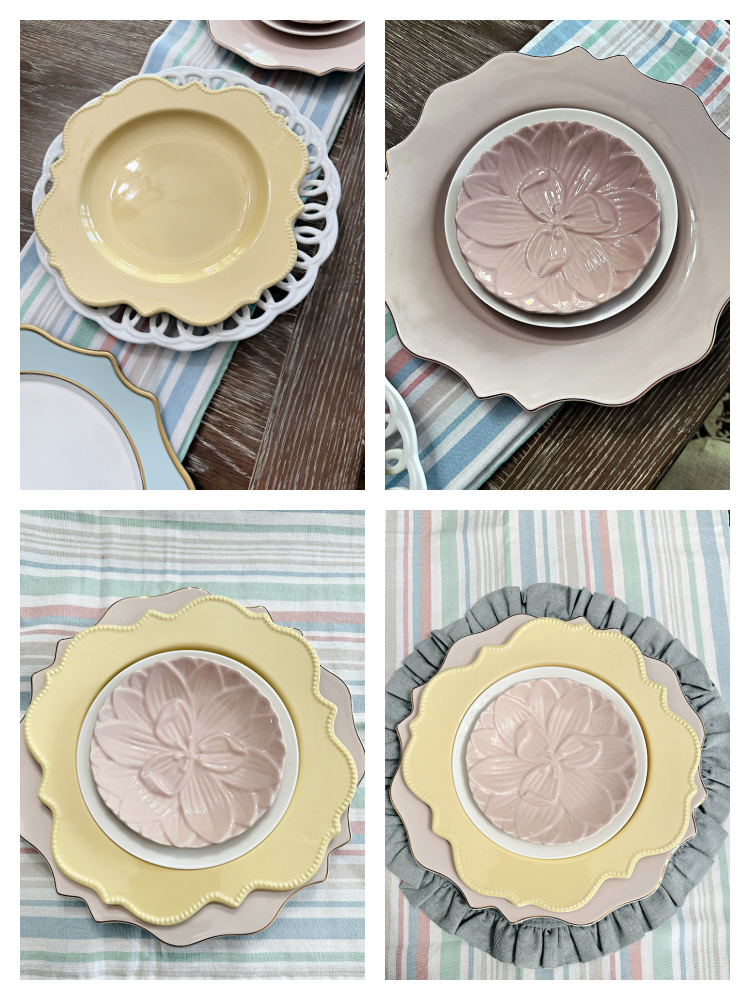
This is where the table starts coming together in my mind.
I look for pieces that work together in color, style, and texture.
I ask myself questions like:
- Does this salad plate feel too large on this dinner plate?
- Are these patterns complementing each other or competing for attention?
- Does this charger enhance the dishes or distract from them?
- Is there enough contrast between the layers?
If you’ve ever wondered why your tables don’t look quite right on the first try, you’re in good company. Mine don’t either. Beautiful tables are almost never created in one attempt—they evolve as you test different combinations.
You can learn principles of color, scale, and proportion, but developing an eye for tablescaping comes through practice. The more tables you create, the more confidently you will recognize when a combination works beautifully.
Creating a beautiful tablescape isn’t about owning the most expensive dishes or following a long list of decorating rules. It’s about creating a welcoming space where people feel comfortable gathering, lingering over a meal, and making memories together.
When it comes to building your place setting, remember that these are guidelines—not hard-and-fast rules.
- Your plates can all come from the same collection, or you can mix and match patterns for a more layered, collected look.
- Your stack can include a plate for every course you’ll be serving, but it doesn’t have to. If you’re serving only one course, a dinner plate and salad plate may be all you need.
- And here’s my favorite rule of all: you don’t have to create a stacked place setting at all. Sometimes a single beautiful plate is exactly the right choice for the style of table you’re creating.
So don’t wait for the perfect occasion or the perfect collection of dishes. Pull out what you have, choose a little inspiration, and start experimenting. You may be surprised by what you create.
Because in the end, the most beautiful tables aren’t remembered for the china or the flowers—they’re remembered for the laughter shared around them.
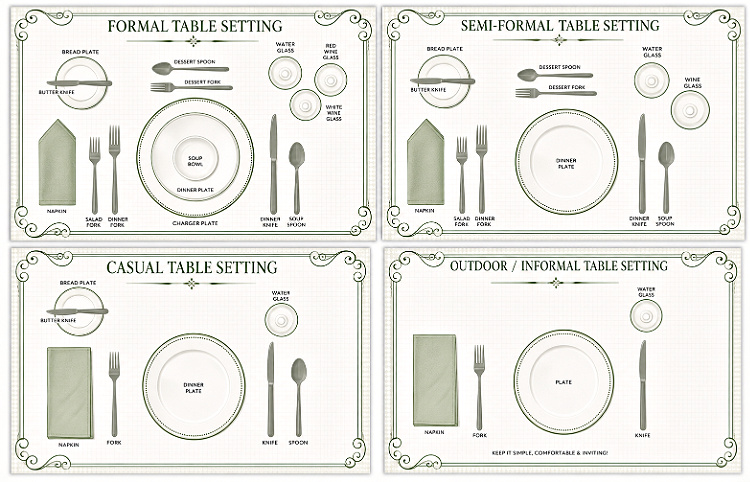
Table Setting Cheat Sheets
Creating a beautiful tablescape is about so much more than where each fork belongs. It’s about making your guests feel welcome and creating a table that tells a story. That said, if you’ve ever wondered where everything goes, these simple guides are a great reference. Think of them as a helpful starting point—not hard-and-fast rules.